
Choosing a fragrance is often about more than simply finding a pleasant smell. The concentration, application method, fragrance notes, and overall formulation can all influence how a scent feels and develops throughout the day. Perfume Essence Oil is an oil-based fragrance format that has become popular among people who prefer concentrated scents and a more controlled way of applying fragrance.
Unlike traditional spray perfumes, perfume oils are typically applied directly to the skin in small amounts. Their scent can develop gradually as the fragrance interacts with the skin. From understanding how perfume essence oil works to choosing fragrance notes, applying it correctly, and storing it properly, this guide explains the key things you should know before making it part of your fragrance routine.
What Is Perfume Essence Oil?
Perfume essence oil is a concentrated, oil-based fragrance product designed to provide a noticeable scent without the spray application used by many traditional perfumes. It generally contains aromatic fragrance materials blended into a suitable oil carrier, although the exact formulation varies between products and brands.
The term “essence oil” can sometimes be used broadly in the fragrance industry, so it is important to read a product’s ingredient information rather than assuming that it contains only natural essential oils. A fragrance oil may contain synthetic aromatic compounds, natural extracts, essential oils, or a combination of different fragrance materials.
One of the main characteristics of perfume oil is its application style. Instead of spraying a large cloud of fragrance into the air, users usually apply a small amount directly to selected areas of the skin. This makes it possible to control how much fragrance is used.
The scent itself can contain several layers. Top notes are generally noticed first, while middle notes form the heart of the fragrance and base notes tend to provide the deeper character that remains later. These layers work together to create the overall fragrance experience.
How Does Perfume Essence Oil Work?
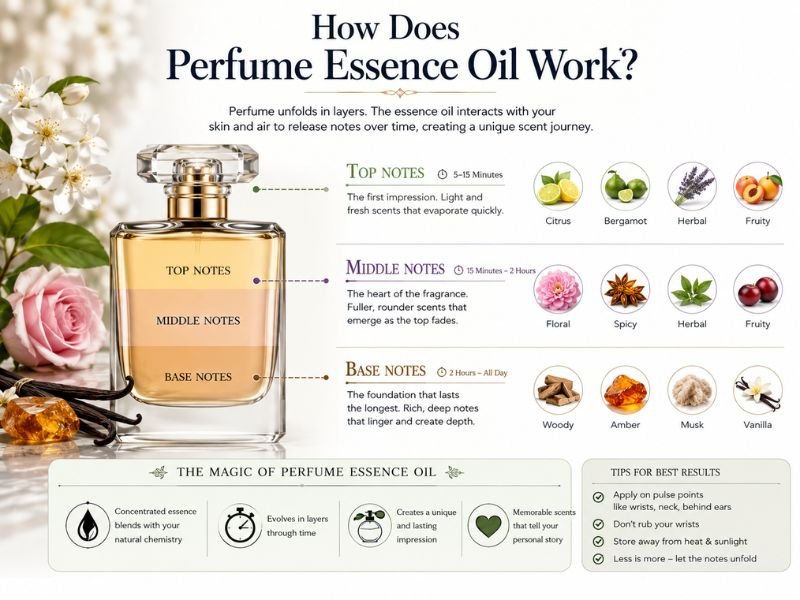
Perfume essence oil develops on the skin through the gradual release and evaporation of its aromatic components. After application, the initial scent may be different from the fragrance that becomes noticeable later.
A fragrance can be divided into three commonly used note categories:
- Top notes: The opening impression that is usually noticed first.
- Middle notes: The central character that becomes more apparent as the fragrance settles.
- Base notes: Deeper materials that contribute to the later stages of the scent.
For example, a perfume oil may open with fresh citrus notes before moving toward floral or spicy heart notes and eventually settling into a woody, musky, amber, or vanilla-based character.
Skin chemistry can also influence how a fragrance smells. Factors such as natural skin oils, temperature, humidity, and individual body chemistry can affect the way fragrance notes develop. This is why the same perfume essence oil may smell slightly different on two people.
Benefits of Perfume Essence Oil
Perfume essence oil offers several characteristics that make it appealing to fragrance users. However, the experience depends heavily on the specific formulation and the way the product is used.
Concentrated Fragrance Experience
Many perfume oils are formulated with a relatively concentrated fragrance composition, allowing a small amount of product to provide a noticeable scent. However, concentration varies between products, so the label and manufacturer’s information should always be considered.
Controlled Application
One advantage of an oil-based perfume is the ability to apply a small amount precisely where desired. This can be useful for people who prefer a more subtle application rather than spraying fragrance broadly.
Portable Format
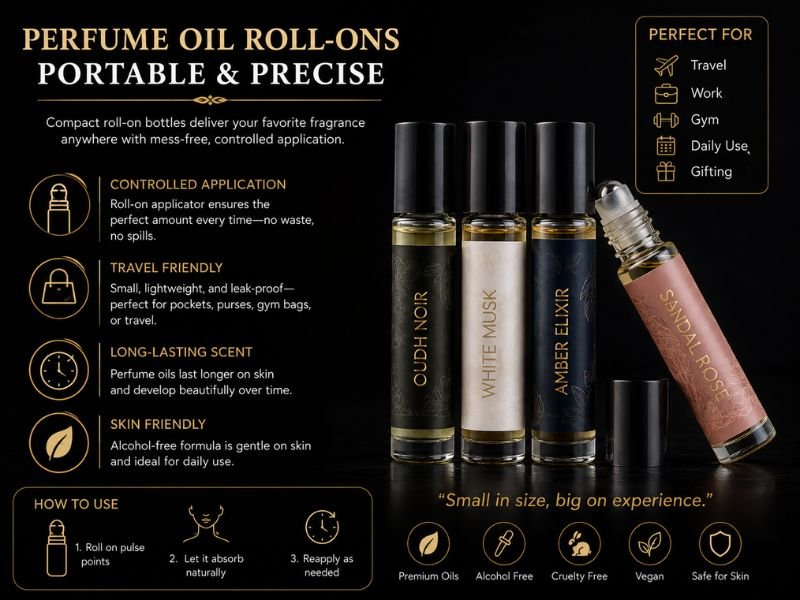
Small perfume oil bottles or roll-on applicators can be convenient to carry. Their compact design can make them practical for travel, handbags, or quick fragrance touch-ups.
Different Fragrance Profiles
Perfume essence oils are available in a wide range of fragrance styles, from floral and fruity scents to woody, musky, amber, oud, and gourmand compositions. This variety makes it easier to explore different scent preferences.
Layering Possibilities
Some fragrance users combine compatible scents to create a personalized fragrance profile. A simple vanilla, musk, floral, or woody oil can sometimes be used as part of a fragrance-layering routine, provided the individual products are intended for such use.
Potential Value
Because perfume oils are often applied in small quantities, some users may find them economical depending on the product’s concentration, bottle size, price, and frequency of use.
Perfume Essence Oil vs Traditional Perfume
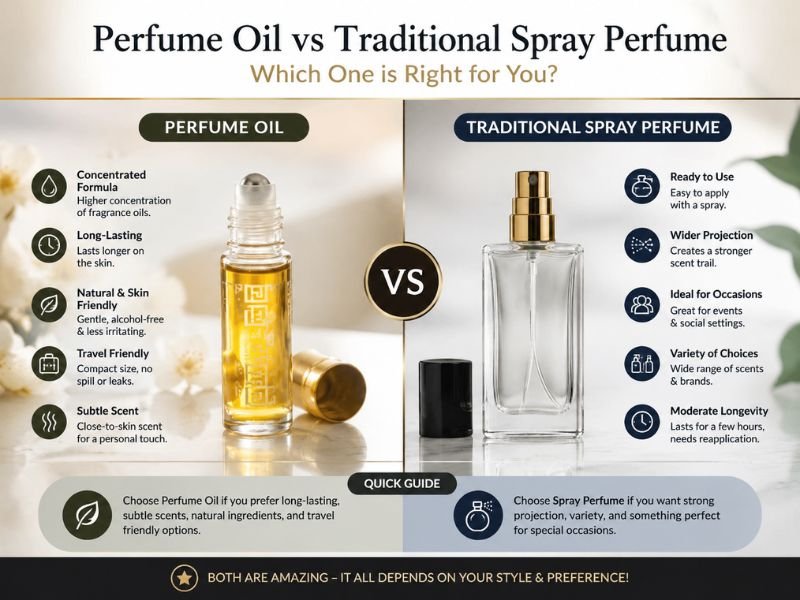
The biggest difference between perfume essence oil and traditional spray perfume is the formulation and application method. Spray perfumes are commonly delivered through an alcohol-based or other liquid fragrance formulation, while perfume oils use an oil-based carrier.
| Feature | Perfume Essence Oil | Traditional Spray Perfume |
| Application | Usually dabbed or rolled onto skin | Sprayed onto skin or clothing |
| Base | Oil-based formulation | Commonly alcohol-based formulation |
| Application control | More targeted | More dispersed |
| Format | Often small and portable | Commonly available in spray bottles |
| Scent development | Depends on formulation and skin | Depends on formulation and skin |
| Longevity | Varies by formula | Varies by formula |
| Fragrance style | Available in many fragrance families | Available in many fragrance families |
Neither format is automatically better for everyone. The right choice depends on personal preference, fragrance style, application habits, and the specific product.
How to Use Perfume Essence Oil Correctly
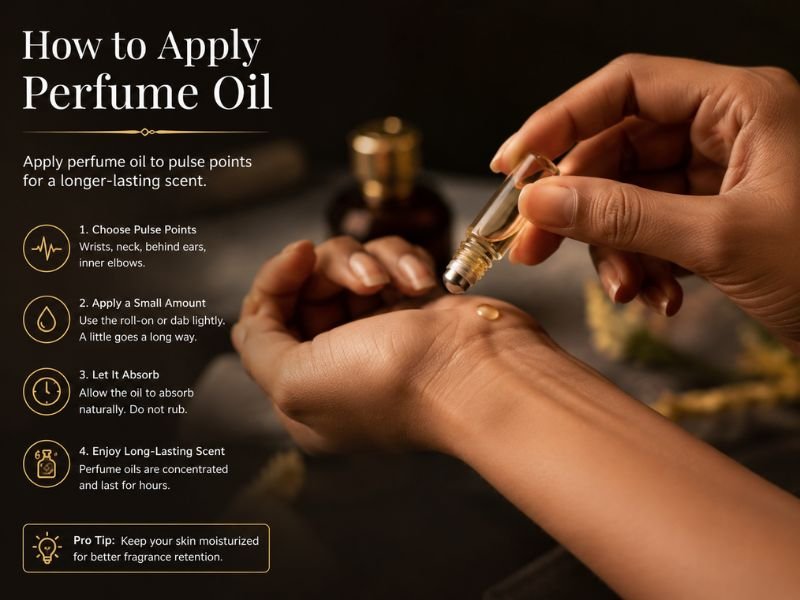
Using perfume essence oil does not require a complicated routine, but applying the right amount can make the experience more comfortable and controlled.
1. Start With Clean, Dry Skin
Apply fragrance to clean, dry skin so that other products do not significantly interfere with the scent.
2. Apply a Small Amount
Use a small amount on suitable areas rather than applying too much at once. Concentrated fragrance can become overpowering when over-applied.
3. Choose Suitable Application Points
Common areas include the wrists, neck, and behind the ears. These areas can allow the fragrance to develop naturally with body warmth.
4. Avoid Excessive Rubbing
Instead of aggressively rubbing the applied fragrance into the skin, allow it to settle naturally.
5. Give the Fragrance Time to Develop
Do not judge the complete fragrance immediately after application. Give the top notes time to transition into the middle and base notes.
6. Follow the Product Instructions
Always check the manufacturer’s instructions, especially if the product has specific application recommendations or warnings.
If your skin is irritated or damaged, avoid applying fragrance products to that area.
Best Places to Apply Perfume Essence Oil
Perfume oil is commonly applied to areas where body warmth can help the fragrance develop gradually. Popular application points include:
- Wrists
- Neck
- Behind the ears
- Other suitable pulse-point areas
A small amount is generally enough to begin with. The ideal quantity depends on the concentration and strength of the individual product.
It is also important to remember that fragrance products are not automatically suitable for every area of the body. Follow the product label and avoid sensitive or irritated skin.
How Long Does Perfume Essence Oil Last?
There is no universal answer to how long perfume essence oil will last. Fragrance performance depends on the formulation, concentration, ingredients, application amount, skin chemistry, climate, and storage conditions.
Base notes such as woods, musk, amber, and some vanilla materials may remain noticeable longer in certain formulations, but this does not mean every perfume oil containing these notes will have the same performance.
Warm and humid weather can also change how a fragrance develops and projects. Similarly, individual skin chemistry can influence both the perceived scent and how quickly certain aromatic materials become less noticeable.
Instead of relying on a fixed number of hours, it is better to evaluate the specific product through reliable reviews or, when possible, test it on your own skin.
How to Choose the Right Perfume Essence Oil
Choosing a perfume essence oil becomes easier when you first understand the type of fragrance you actually enjoy.
Consider the Fragrance Family
Fragrance families provide a useful starting point:
- Floral: Rose, jasmine, violet, and other flower-inspired scents.
- Woody: Sandalwood, cedar, vetiver, and similar warm woody notes.
- Citrus: Lemon, bergamot, orange, grapefruit, and other fresh citrus notes.
- Fresh: Clean, airy, aquatic, or refreshing compositions.
- Fruity: Berry, apple, peach, pear, and other fruit-inspired notes.
- Amber: Warm, rich, resinous, and sweet characteristics.
- Gourmand: Dessert-inspired notes such as vanilla, caramel, chocolate, or praline.
- Musky: Soft, warm, clean, or sensual fragrance characteristics.
Check the Fragrance Notes
Look at the listed top, middle, and base notes to understand how the fragrance is expected to develop. If you already know which ingredients you enjoy, note descriptions can help narrow your choices.
Consider Concentration
Do not assume that every product labeled “essence oil” has the same concentration. Check the product information and compare products based on their actual formulation and intended use.
Look for Ingredient Information
Transparent ingredient information can help you understand what you are purchasing. If you have known sensitivities, check the product label carefully before use.
Consider Brand Reputation
Established brands with clear product information, proper packaging, and consistent customer feedback may make the buying process easier.
Read Reviews Carefully
Reviews can help you understand how a fragrance smells and performs for different people, but fragrance is subjective. A scent described as fresh by one person may seem sharp or citrus-heavy to another.
Think About the Occasion
A light citrus or fresh fragrance may suit casual daytime use, while woody, amber, oud, or gourmand fragrances may appeal more for evening or colder-weather settings.
Popular Fragrance Notes in Perfume Essence Oils
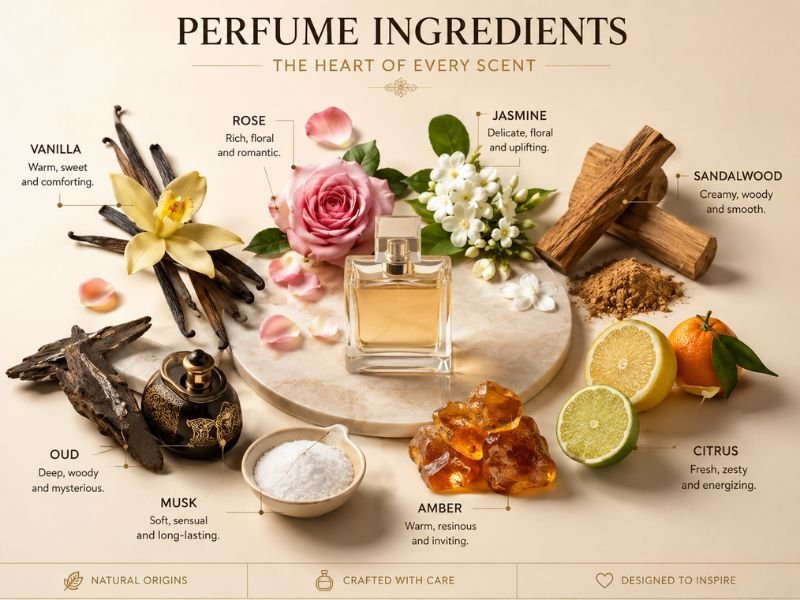
The notes used in perfume essence oils can dramatically change their overall personality.
Vanilla
Vanilla is commonly associated with warm, creamy, sweet, and comforting fragrance profiles and is frequently used in gourmand compositions.
Rose
Rose provides a classic floral character that can range from fresh and delicate to rich and deep depending on the surrounding notes.
Jasmine
Jasmine is a prominent floral note that can add a rich, expressive, and distinctive character to a fragrance.
Sandalwood
Sandalwood is known for its smooth, woody character and is often used in the base of warm fragrance compositions.
Oud
Oud can provide a deep, woody and resinous character, with its exact smell varying significantly according to the material and formulation.
Musk
Musk notes are commonly used to provide softness, warmth, cleanliness, or depth in fragrance compositions.
Amber
Amber accords often contribute warmth, sweetness, richness, and depth.
Citrus
Citrus notes such as bergamot, lemon, and orange can provide a bright and refreshing opening.
Lavender
Lavender is commonly associated with aromatic, herbal, clean, and slightly floral characteristics.
Perfume Essence Oil for Different Occasions
The ideal fragrance can depend on the environment, season, and occasion.
For everyday wear, fresh, citrus, clean, fruity, or softly floral fragrances can be easy choices for many people.
For casual settings, a fragrance that matches your personal taste without becoming overwhelming can work well.
For professional environments, subtle application and clean or understated fragrance profiles may be more appropriate, especially where other people are nearby.
For evening occasions, richer woody, amber, musky, gourmand, or oud-based fragrances may provide a deeper fragrance experience.
During warm weather, fresh and citrus-oriented scents may feel more comfortable, while richer fragrance styles can be appealing during cooler seasons.
Ultimately, fragrance choice is personal, and the amount applied can be just as important as the fragrance itself.
How to Store Perfume Essence Oil
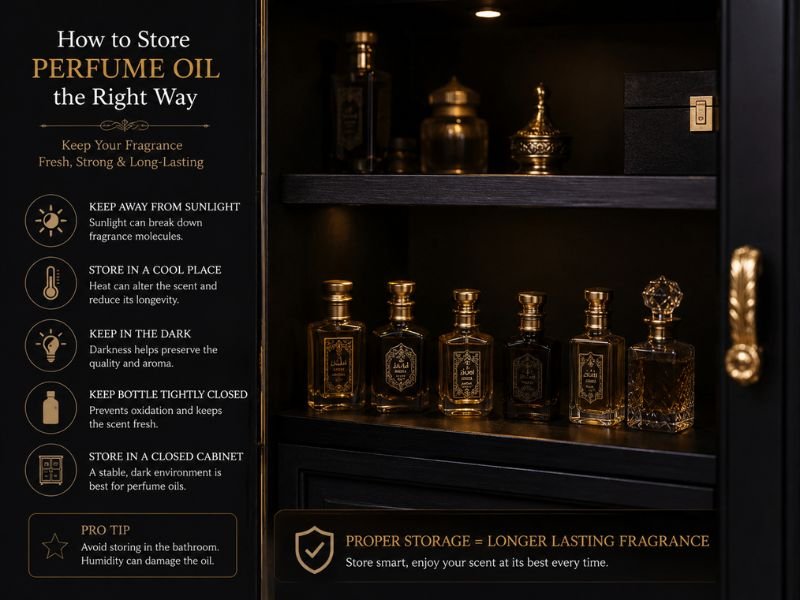
Proper storage can help maintain the quality of a fragrance product over time.
Keep perfume essence oil:
- Away from direct sunlight
- In a cool, dry place
- Tightly closed when not in use
- Away from excessive heat
- Protected from unnecessary temperature changes
Avoid leaving the bottle in places exposed to strong sunlight or significant heat, such as near a window or inside a hot vehicle.
Good storage practices can help reduce unnecessary exposure to environmental conditions that may affect the fragrance over time.
Common Mistakes to Avoid When Using Perfume Essence Oil
Even a high-quality perfume oil may not provide the expected experience if it is used incorrectly.
Applying Too Much
More fragrance does not necessarily mean a better fragrance experience. Start with a small amount and increase only when appropriate.
Rubbing the Fragrance Aggressively
Excessive rubbing can interfere with the initial fragrance experience, so it is generally better to apply and allow the product to settle.
Applying to Irritated Skin
Fragrance products should not be applied to irritated or damaged skin. Always follow the product’s safety instructions.
Poor Storage
Leaving perfume essence oil in direct sunlight or excessive heat can be avoided by choosing a cool, dry storage location.
Mixing Too Many Strong Fragrances
Layering can be interesting, but combining several powerful scents can create an unpleasant or confusing fragrance profile.
Ignoring Product Instructions
Different products can have different intended uses, so always read the manufacturer’s directions before applying them.
Frequently Asked Questions About Perfume Essence Oil
What is perfume essence oil?
Perfume essence oil is a concentrated oil-based fragrance product designed to provide a controlled and direct way to wear fragrance.
Is perfume essence oil the same as perfume?
Perfume essence oil and traditional perfume are both fragrance products, but they can differ in their carriers, concentration, formulation, and application method.
How do you apply perfume essence oil?
Apply a small amount of perfume essence oil to suitable pulse points such as the wrists or neck and allow it to settle naturally.
Does perfume essence oil last longer than spray perfume?
Its longevity depends on the specific formulation, concentration, ingredients, skin chemistry, climate, and application rather than the oil format alone.
How should perfume essence oil be stored?
Store perfume essence oil tightly closed in a cool, dry place away from direct sunlight and excessive heat.
Conclusion
Perfume Essence Oil offers a convenient and controlled approach to wearing fragrance, with many options ranging from floral and citrus compositions to woody, musky, amber, oud, and gourmand profiles. Understanding its formulation, fragrance notes, application method, expected performance, and storage requirements can help you make a more informed choice. Rather than focusing only on concentration or longevity claims, consider your personal fragrance preferences, the occasion, product information, and how the scent develops on your own skin.