
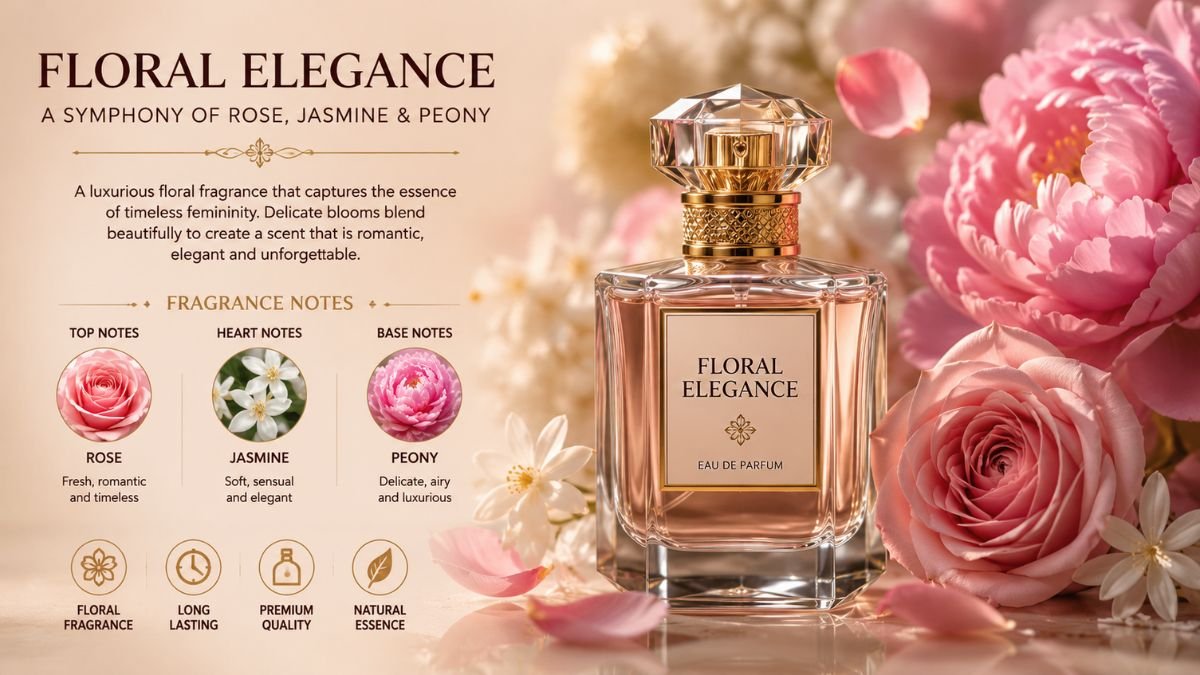
Floral perfume is one of the most popular fragrance categories, known for its beautiful combination of flower-inspired aromas, elegance, freshness, and versatility. From romantic rose and creamy jasmine to soft peony and exotic tuberose, floral fragrances can create many different scent experiences. Some are light and refreshing for everyday use, while others are rich, sweet, powdery, or sophisticated enough for evenings and special occasions.
Choosing the right floral perfume is easier when you understand fragrance notes, perfume concentration, seasonality, longevity, and the type of scent you personally enjoy. In this guide, you will learn what floral perfume is, what it smells like, the most popular floral notes, different floral fragrance types, how to choose one, how long it can last, and how to apply it properly. You will also find practical buying tips and answers to common questions about floral fragrances.
What Is Floral Perfume?
Floral perfume is a fragrance built around the scent characteristics of flowers. Floral notes can come from natural flower extracts, essential oils, aroma molecules, or combinations of several ingredients designed to recreate a particular floral impression.
Floral fragrances can focus on one dominant flower or combine several flowers with fruity, woody, musky, fresh, spicy, or amber notes. This flexibility makes the floral fragrance family extremely broad.
A perfume centered mainly around rose may feel romantic and classic, while jasmine can create a creamy and sensual impression. Lavender may feel aromatic and clean, whereas peony can give a soft, fresh character.
Floral perfume is not limited to one gender or age group. Modern perfumery uses floral notes across women’s, men’s, and unisex fragrances, making floral scents suitable for anyone who enjoys them.
What Does Floral Perfume Smell Like?
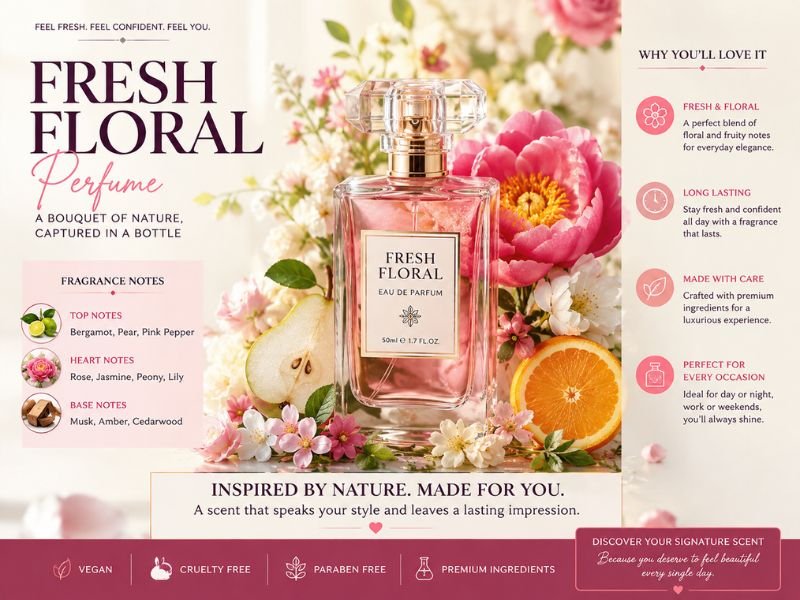
The smell of a floral perfume depends heavily on the flowers used, supporting ingredients, concentration, and overall fragrance composition. Some floral scents are fresh and airy, while others are sweet, creamy, powdery, green, or rich.
A floral fragrance may open with fresh citrus or fruity notes before revealing its floral heart. Woody, musky, vanilla, amber, or other base notes can then provide depth and help shape the fragrance’s final character.
This means there is no single smell that describes every floral perfume. Instead, floral fragrances cover a wide spectrum of scent profiles.
Fresh Floral Scents
Fresh floral scents usually feel clean, airy, bright, and easy to wear. They may combine flowers such as peony, orange blossom, lily-of-the-valley, or soft rose with citrus, green, or watery notes.
These fragrances can work particularly well during warmer weather and daytime activities because their overall character tends to feel light and refreshing.
Sweet Floral Scents
Sweet floral perfumes combine flowers with fruity, vanilla, caramel-like, honeyed, or other sweet-smelling notes. Rose, jasmine, gardenia, and orange blossom can all appear in sweeter compositions.
Sweet floral fragrances are often chosen for dates, evenings, celebrations, or whenever someone prefers a noticeable and expressive scent.
Rich and Powdery Floral Scents
Rich floral perfumes may feature rose, iris, violet, jasmine, tuberose, or other deeper floral materials combined with musk, woods, amber, or powdery accords.
Powdery floral fragrances can create an elegant and sophisticated impression. They are often appealing to people who prefer classic, smooth, and refined fragrance styles.
Popular Floral Perfume Notes
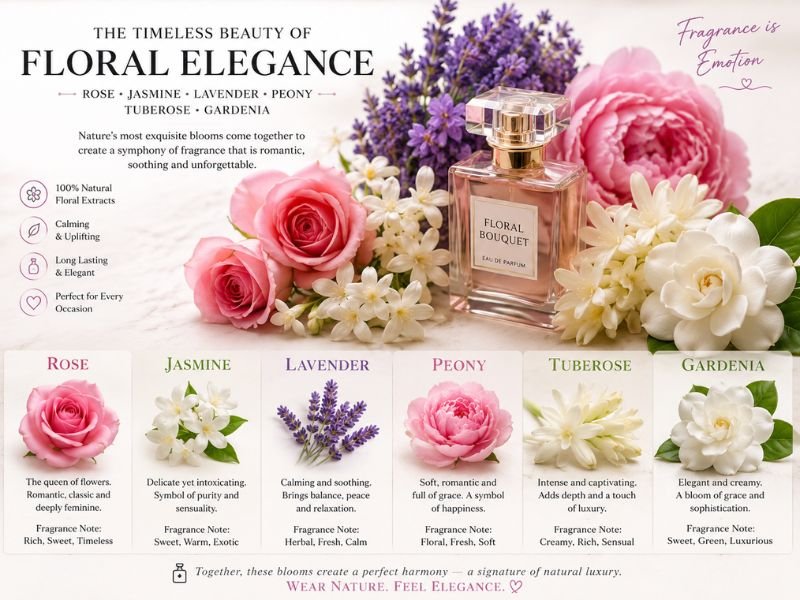
Understanding individual floral notes can help you narrow down your fragrance preferences. Different flowers contribute very different characteristics to a perfume.
Rose
Rose is one of the most recognizable floral notes in perfumery. Depending on the composition, it can smell fresh, dewy, sweet, spicy, powdery, or deep.
Rose perfumes can be paired with fruits, citrus, woods, musk, vanilla, and amber to create completely different fragrance profiles.
Jasmine
Jasmine is known for its rich, creamy, and highly expressive floral character. It can add warmth and depth to a fragrance and is commonly used in both feminine and unisex compositions.
Jasmine may be especially noticeable in the heart of a perfume, where it helps create the central floral identity.
Lavender
Lavender has a distinctive aromatic floral character that can feel fresh, herbal, clean, and slightly woody. It is widely used in men’s, women’s, and unisex perfumes.
Lavender works particularly well with citrus, herbs, woods, musk, vanilla, and aromatic ingredients.
Peony
Peony is often associated with a soft, fresh, airy floral impression. It can give a fragrance a youthful and elegant character without making the composition feel excessively heavy.
Peony is commonly found in fragrances designed for spring, daytime wear, and lighter occasions.
Tuberose
Tuberose has a powerful, creamy, and exotic floral personality. It can make a perfume feel richer and more noticeable.
Because tuberose can be quite expressive, fragrances featuring it prominently may work especially well for evenings or special occasions.
Gardenia
Gardenia is a creamy white floral note with a rich and elegant character. It can give a fragrance a smooth, luxurious impression.
Gardenia often works well alongside jasmine, tuberose, musk, woods, and other white floral notes.
Orange Blossom
Orange blossom provides a floral character with a bright, fresh, slightly citrus-like impression. It can make a perfume feel clean and radiant.
It is often combined with citrus, honey, musk, vanilla, and other floral ingredients.
Types of Floral Perfumes
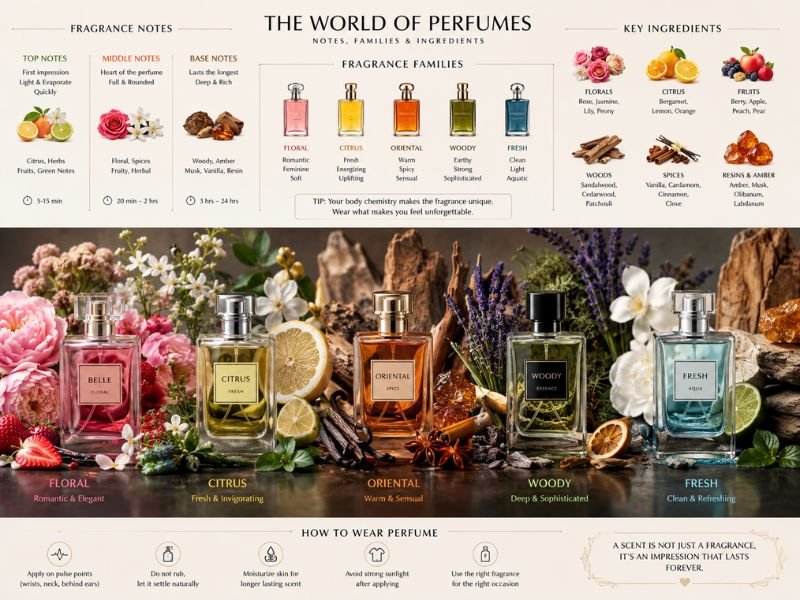
Floral perfumes can be divided into several styles based on the other fragrance families that support the flowers.
Floral Fruity Perfumes
Floral fruity perfumes combine flowers with fruit-inspired notes such as peach, pear, berries, apple, citrus, or tropical fruits.
The result can be bright, sweet, playful, and easy to wear. These fragrances are often popular for daytime use and warmer seasons.
Floral Woody Perfumes
Floral woody perfumes combine flowers with woods such as sandalwood, cedar, vetiver, or other woody accords.
The woody base can give floral fragrances more depth, structure, and sophistication. Depending on the composition, this style can be feminine, masculine, or completely unisex.
Floral Musk Perfumes
Floral musk perfumes combine flowers with soft or clean musk accords. Musk can provide a smooth foundation that makes the floral notes feel more rounded.
These fragrances can work well for everyday wear when the overall concentration and projection are moderate.
Floral Oriental or Amber Perfumes
Floral amber-style perfumes combine floral notes with ingredients such as amber accords, spices, resins, vanilla, woods, or warm materials.
They are often richer and more intense than fresh floral fragrances and can be especially suitable for cooler weather and evening occasions.
Fresh Floral Perfumes
Fresh floral perfumes focus on airy flowers combined with citrus, green, aquatic, or clean accords.
They are generally appealing to people who want a floral fragrance that feels light and refreshing rather than dense or sweet.
Best Floral Perfume for Different Occasions
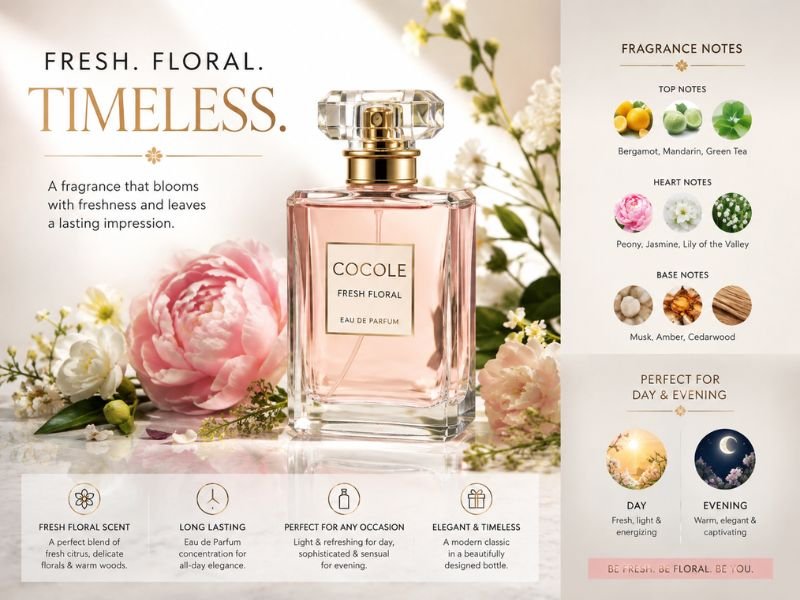
There is no single floral perfume that is perfect for everyone. The best choice depends on the setting, season, personal preference, and desired fragrance intensity.
Everyday Wear
For everyday use, look for floral fragrances with a balanced composition and moderate intensity. Fresh floral, soft musk, light rose, peony, or floral-fruity profiles can be practical choices.
A fragrance that feels comfortable to you and appropriate for your surroundings is usually more useful than simply choosing the strongest perfume.
Work and Office
Office fragrances generally work better when they are controlled and not excessively projecting. Soft floral, clean musk, fresh rose, lavender, or light white-floral compositions can provide a polished scent without becoming overwhelming.
When wearing perfume at work, a few moderate sprays may be more appropriate than applying a highly concentrated fragrance heavily.
Date Nights
For an evening or date setting, you may prefer a floral perfume with more depth. Jasmine, tuberose, rose, gardenia, vanilla, amber, and musk can create a richer fragrance profile.
The goal should be to choose a scent that fits your personality rather than simply choosing the most powerful option available.
Weddings and Special Events
Special occasions can be suitable for elegant floral perfumes with noticeable but balanced character. Rose, jasmine, gardenia, orange blossom, and white floral compositions can all work well.
For formal events, consider the venue and weather before choosing fragrance intensity.
Spring and Summer
Fresh floral perfumes are especially appealing in warm weather. Peony, orange blossom, rose, lavender, and airy white florals can pair nicely with a spring or summer atmosphere.
Light citrus-floral combinations can also feel refreshing during hot weather.
Fall and Winter
During cooler months, richer floral fragrances can feel more comfortable and noticeable. Floral amber, floral woody, rose-vanilla, and warm jasmine compositions may work well.
Fragrance performance can also feel different in cold weather, so testing the perfume in your actual environment is useful.
Floral Perfume for Women and Men
Floral perfume is often associated with women’s fragrances, but floral notes are not exclusive to any gender. Flowers are fundamental materials in modern perfumery and can be used in men’s, women’s, and unisex fragrances.
Men’s fragrances frequently use floral ingredients alongside woods, citrus, spices, musk, leather, or aromatic notes. Lavender, rose, jasmine, iris, and orange blossom can all appear in masculine or unisex compositions.
Rather than choosing a perfume based only on its marketing category, focus on the notes and scent profile you genuinely enjoy.
How Long Does Floral Perfume Last?
The longevity of a floral perfume depends on several factors, so there is no universal number of hours that applies to every fragrance.
One important factor is fragrance concentration. Eau de parfum generally contains a higher concentration of aromatic materials than eau de toilette, although actual performance varies by formulation.
Ingredients also influence longevity. Some floral materials are naturally more persistent, while lighter floral and fresh notes may become less noticeable sooner.
Skin chemistry, weather, application method, and storage can also affect performance. Fragrance may behave differently on dry skin compared with moisturized skin, and heat can change how quickly scent develops and evaporates.
Proper storage is also important. Keep perfume away from excessive heat, direct sunlight, and major temperature changes.
How to Choose the Right Floral Perfume
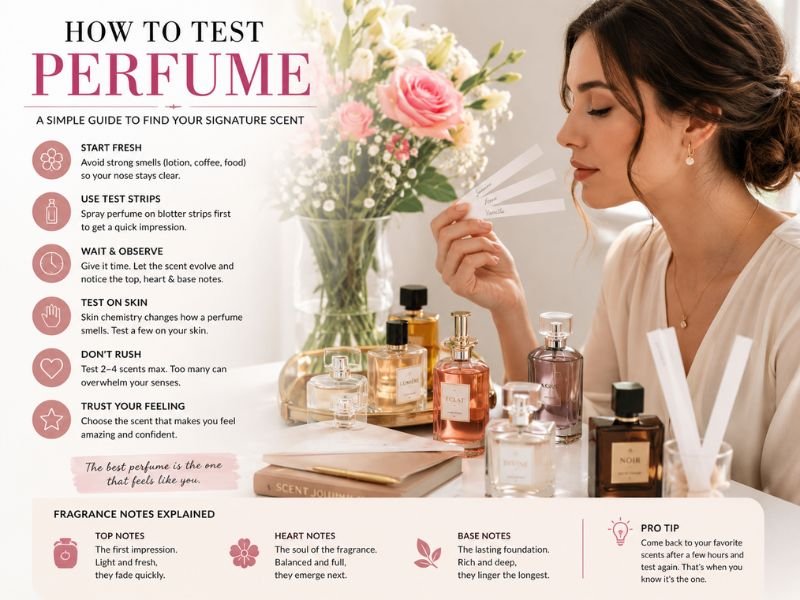
Choosing a floral fragrance becomes easier when you break the decision into a few simple steps.
Identify Your Favorite Floral Notes
Start by thinking about which flowers you enjoy. If you like classic and romantic scents, rose may appeal to you. If you prefer creamy and expressive fragrances, jasmine or tuberose may be more suitable.
If you prefer fresh and airy scents, peony or orange blossom could be worth exploring.
Consider the Season
Think about when you plan to wear the perfume. Fresh and airy floral compositions may feel comfortable in warmer conditions, while richer floral-amber or floral-woody fragrances may suit cooler weather.
This is not a strict rule because personal preference always matters.
Think About the Occasion
A perfume for school, work, everyday errands, a formal event, or an evening occasion may have different requirements.
Consider how strong you want the fragrance to be and whether the surrounding environment is enclosed or open.
Test Before Buying
Whenever possible, test a perfume on your skin before purchasing a full bottle. Smelling a fragrance on paper can help with the first impression, but skin can reveal a different development.
Give the perfume some time to develop through its opening, heart, and base notes.
Check Fragrance Concentration
Pay attention to whether a product is marketed as eau de parfum, eau de toilette, parfum, or another concentration.
Concentration can provide a useful indication of fragrance intensity, but it does not guarantee a specific longevity or projection level.
How to Apply Floral Perfume Correctly
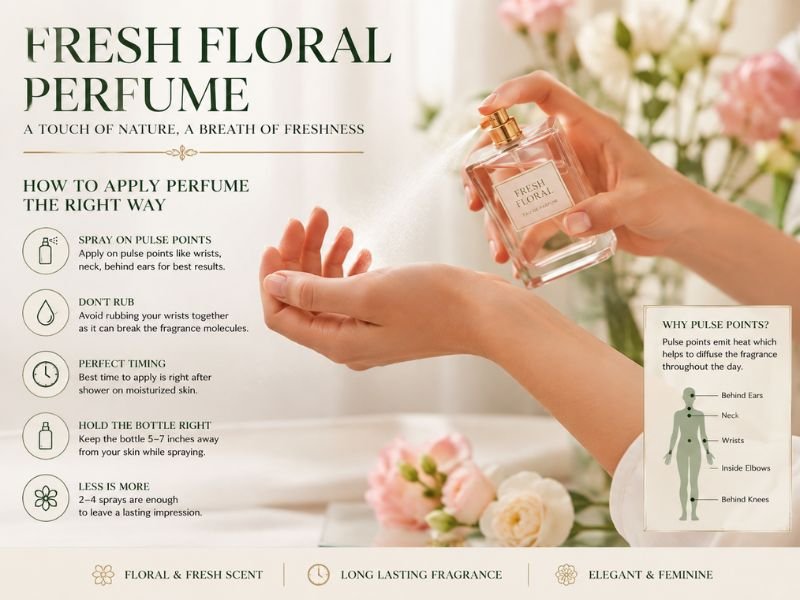
Apply perfume to clean, dry skin and focus on areas where you want the fragrance to be noticeable.
Common application areas include the wrists, neck, and other pulse-point areas. Avoid rubbing your wrists together immediately after application because vigorous rubbing can alter how the fragrance develops on the skin.
You can also apply fragrance lightly to clothing when the product instructions and fabric allow it. Always be cautious with delicate fabrics because some perfume formulas may leave marks.
Using an unscented moisturizer before applying perfume may also help fragrance feel more comfortable on dry skin.
The most important rule is moderation. More perfume does not necessarily mean a better fragrance experience.
Floral Perfume vs Other Fragrance Families
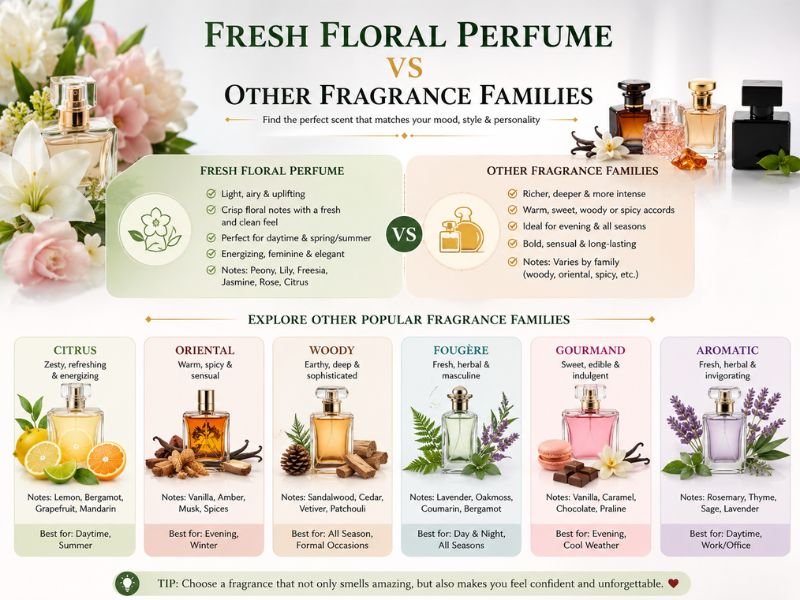
Floral perfumes can overlap with several other fragrance families. Understanding these differences can help you choose a scent that matches your preferences.
| Fragrance Family | Typical Character | Common Pairings |
| Floral | Flower-focused, elegant, soft, fresh, or rich | Rose, jasmine, peony |
| Fruity | Juicy, bright, sweet, or fresh | Pear, peach, berries |
| Woody | Dry, warm, earthy, or smooth | Cedar, sandalwood |
| Fresh | Clean, airy, bright, refreshing | Citrus, aquatic, green notes |
| Amber | Warm, rich, sweet, resinous | Vanilla, spices, woods |
| Gourmand | Sweet, edible-inspired, creamy | Vanilla, caramel, chocolate |
A perfume can belong to more than one style. For example, a fragrance may be both floral and fruity or floral and woody.
Are Floral Perfumes Good for Everyday Wear?
Yes, floral perfumes can be excellent for everyday wear when their scent profile matches your preferences and environment.
Fresh floral, soft rose, peony, lavender, orange blossom, and light floral-musk compositions can work well for casual daytime use. However, richer floral perfumes with strong projection may be better suited to evenings or special occasions.
The best everyday floral perfume is one that feels comfortable, fits your routine, and does not overwhelm the people around you.
Floral Perfume Buying Guide
Before buying a floral perfume, consider more than just the bottle design or advertising.
Notes
Check the listed top, heart, and base notes to understand the fragrance’s intended character.
Concentration
Compare eau de parfum, eau de toilette, parfum, and other concentrations to understand the product format.
Longevity
Look for reliable information about how the fragrance performs, but remember that longevity can differ from person to person.
Sillage
Sillage describes the scent trail left as someone wearing the fragrance moves around. Choose a projection level appropriate for your environment.
Season
Fresh floral scents may feel appealing in warmer conditions, while richer floral compositions can suit cooler weather.
Occasion
Think about whether the perfume will mainly be used for everyday activities, work, evenings, or formal events.
Price
Set a realistic budget before shopping. A higher price does not automatically mean a fragrance will suit your preferences better.
Authenticity
Purchase from reputable sellers and check packaging, labeling, and seller information when buying branded perfumes.
Reviews
Reviews can help identify common opinions about scent, performance, and value, but remember that fragrance is subjective.
Sample Sizes
If available, samples or travel sizes can be a smart way to test a perfume before committing to a full-size bottle.
Frequently Asked Questions About Floral Perfume
What is floral perfume?
Floral perfume is a fragrance centered on flower-inspired notes such as rose, jasmine, lavender, peony, or gardenia.
What does floral perfume smell like?
Floral perfume can smell fresh, sweet, powdery, creamy, green, or rich depending on its flowers and supporting notes.
Is floral perfume good for everyday wear?
Yes, soft and moderate floral fragrances can be excellent choices for everyday use.
How long does floral perfume last?
Its longevity varies according to concentration, ingredients, skin chemistry, weather, application, and storage.
How do I choose the best floral perfume?
Choose a floral perfume based on your preferred notes, season, occasion, concentration, and desired fragrance intensity.
Conclusion
Floral perfume remains a versatile fragrance category because it can range from fresh and airy to sweet, powdery, creamy, woody, and richly sophisticated. Understanding popular notes such as rose, jasmine, lavender, peony, tuberose, gardenia, and orange blossom can make it easier to identify the styles you enjoy. When choosing a floral fragrance, consider the season, occasion, concentration, longevity, sillage, and your personal preferences rather than relying only on marketing labels. Whether you want an everyday floral scent, an elegant fragrance for special occasions, or a richer floral composition for evenings, the right choice is ultimately the one that fits your personality and feels comfortable to wear.