
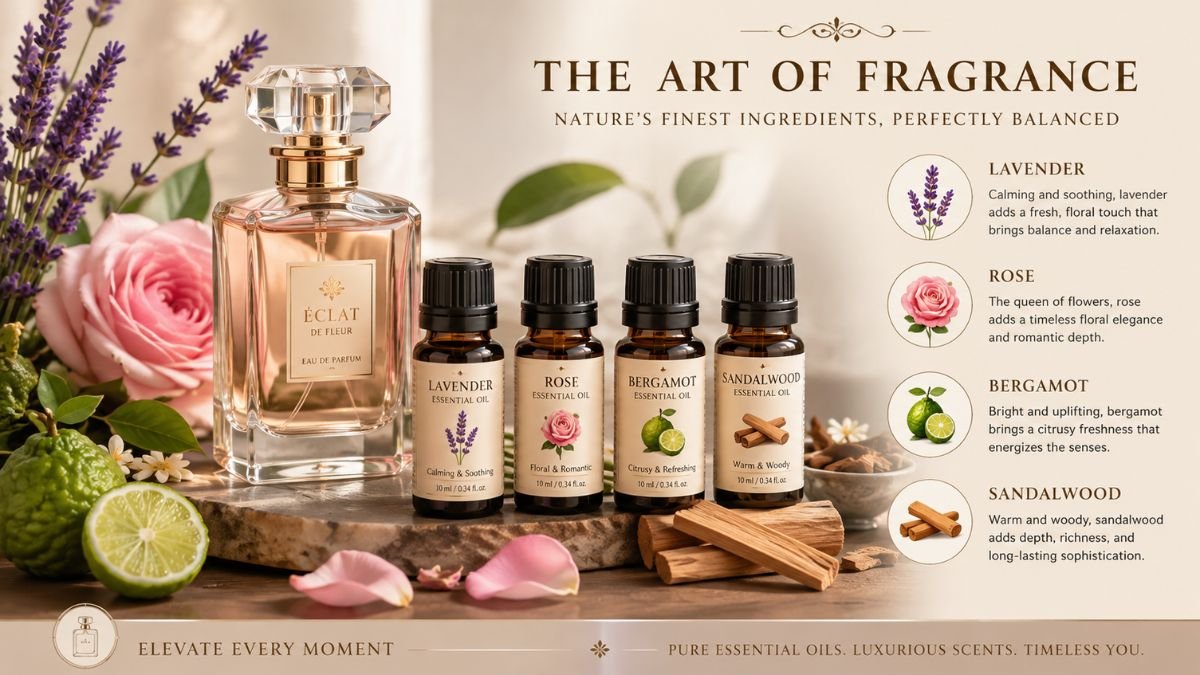
Perfume and Essential Oils are two closely related parts of the fragrance world, but they are not the same thing. Perfume is a finished fragrance product created from aromatic materials and other ingredients, while essential oils are concentrated aromatic extracts obtained from plants. Many fragrance enthusiasts are interested in essential oils because they can provide distinctive botanical scents such as lavender, rose, sandalwood, bergamot, and jasmine. At the same time, modern perfumery uses a wide range of natural and synthetic aroma materials to create fragrances with different levels of complexity, performance, and stability. Perfume and Essential Oils
Understanding the difference between these products can make it easier to choose a fragrance, understand perfume ingredients, and appreciate how different scents are constructed. In this guide, you will learn what perfume and essential oils are, how they differ, how essential oils can be used in fragrance, which essential oils are popular in perfumery, how perfume oils compare with essential oils, and what safety and storage considerations are important. Perfume and Essential Oils
What Are Perfume and Essential Oils?
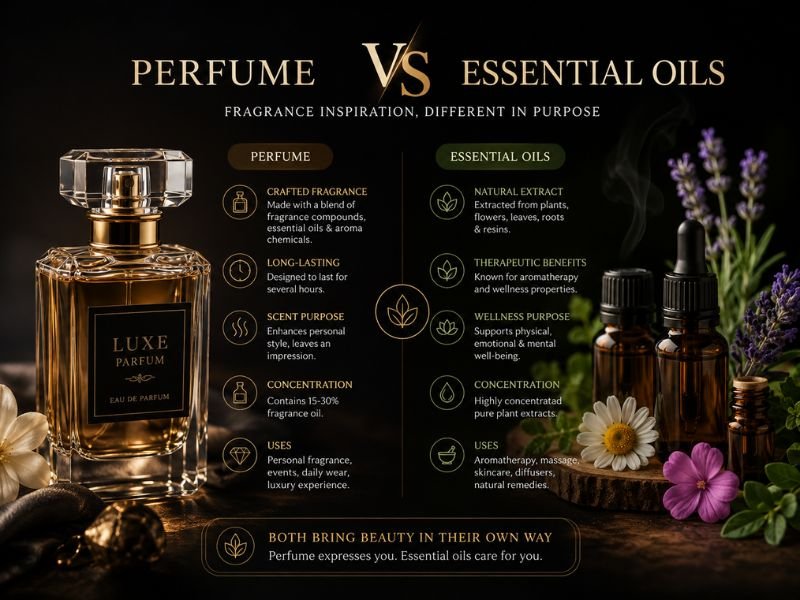
Although perfume and essential oils can both be used to create pleasant aromas, they serve different purposes and are produced in different ways. Perfume and Essential Oils
What Is Perfume?
Perfume is a formulated fragrance product designed to produce a particular scent when applied to the skin, clothing, or another suitable surface. A perfume may contain a combination of aromatic ingredients, alcohol, water, solvents, stabilizers, and other materials depending on the formulation. Perfume and Essential Oils
The fragrance itself is usually built around a combination of top notes, middle notes, and base notes. Top notes are often the first aromas noticed after application and tend to evaporate relatively quickly. Middle notes become more noticeable as the fragrance develops, while base notes generally provide depth and can remain noticeable for much longer. Perfume and Essential Oils
Perfumes are also available at different concentrations. Eau de parfum, eau de toilette, eau de cologne, perfume extract, and perfume oils can differ in fragrance concentration, composition, and expected performance. A higher concentration does not automatically mean that every perfume will last longer because the individual ingredients and formulation also have a major influence. Perfume and Essential Oils
What Are Essential Oils?
Essential oils are concentrated aromatic materials obtained from aromatic plant material. Depending on the plant, they can be produced through methods such as steam distillation, expression, or other specialized extraction processes. Perfume and Essential Oils
An essential oil contains a complex mixture of naturally occurring aromatic compounds that gives the oil its characteristic scent. Lavender essential oil, for example, has a recognizable herbal and floral character, while cedarwood is typically more woody and dry. Perfume and Essential Oils
Essential oils are highly concentrated and should not automatically be treated as ready-to-use perfumes. Their suitability for topical use depends on the particular oil, concentration, formulation, and individual sensitivity. Perfume and Essential Oils
What Is the Difference Between Perfume and Essential Oils?
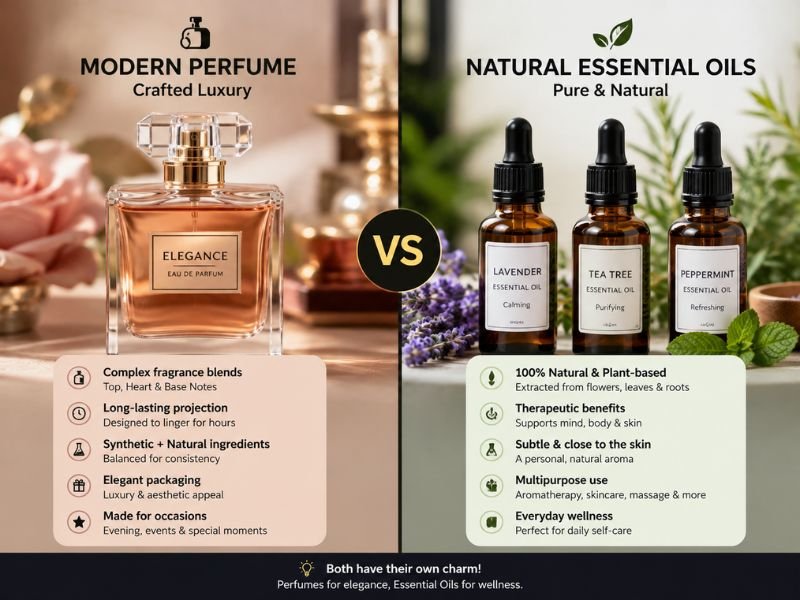
The simplest distinction is that perfume is a finished fragrance formulation, whereas an essential oil is a concentrated aromatic ingredient derived from plant material. Perfume and Essential Oils
| Feature | Perfume | Essential Oil |
| Main purpose | Wearing or experiencing a finished fragrance | Aromatic ingredient and other appropriate uses |
| Source | Can contain natural and synthetic materials | Derived from aromatic plant material |
| Composition | Complex formulated blend | Naturally occurring mixture of plant compounds |
| Fragrance profile | Designed by a perfumer | Characteristic of the source plant |
| Concentration | Varies by perfume type | Naturally concentrated aromatic material |
| Longevity | Depends on formulation and ingredients | Varies significantly by oil |
| Common use | Personal fragrance | Fragrance ingredient and other suitable applications |
| Formulation | Usually carefully engineered for performance | May be used as an ingredient in a larger formulation |
Another important difference is consistency. Perfume is generally formulated to achieve a particular scent experience, while the aroma of an essential oil can vary depending on the plant variety, growing conditions, extraction method, and processing.
Essential oils can therefore be important perfume ingredients, but an essential oil by itself is not necessarily equivalent to a finished perfume. Perfume and Essential Oils
Can Essential Oils Be Used in Perfume?
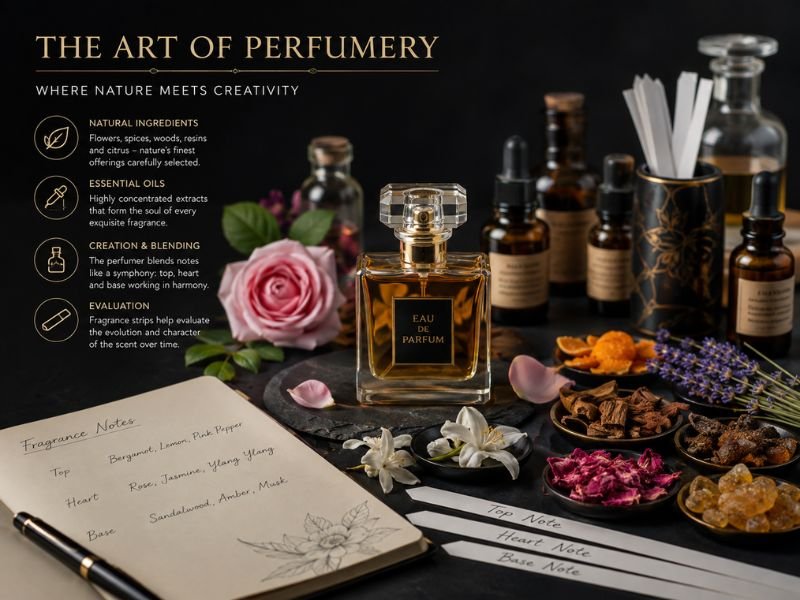
Yes, essential oils can be used as aromatic ingredients in certain perfume formulations. Their natural botanical character can contribute depth, freshness, warmth, sweetness, spice, or floral complexity to a fragrance.
Perfumers may use different aromatic materials together to create a balanced composition. Essential oils can function as individual notes or as part of broader essential oil blends. However, not every essential oil behaves in the same way, and some are more volatile than others. Perfume and Essential Oils
Top Notes
Top notes are generally the first part of a fragrance that the nose detects. Citrus and some fresh aromatic materials are commonly associated with this role because they can create an immediate, bright impression. Perfume and Essential Oils
Bergamot and lemon are examples of essential oils often associated with fresh and lively fragrance profiles.
Middle Notes
Middle notes help shape the main character of a fragrance after the initial top notes begin to fade. Floral and aromatic materials can contribute strongly to this stage. Perfume and Essential Oils
Lavender, jasmine, rose, and ylang-ylang are examples of materials that can contribute floral or aromatic qualities.
Base Notes
Base notes provide depth and help give a fragrance a more lasting foundation. Woody, resinous, earthy, and some rich aromatic materials can work well in this role. Perfume and Essential Oils
Sandalwood, cedarwood, patchouli, and frankincense are commonly associated with deeper fragrance profiles.
Blending and Dilution
Essential oils used in a perfume formulation are generally considered ingredients rather than automatically being a complete perfume. A finished fragrance needs an appropriate formulation that considers scent balance, stability, intended application, and safety. Perfume and Essential Oils
For products intended for skin, appropriate dilution is especially important because essential oils are concentrated substances.
Popular Essential Oils Used in Perfume
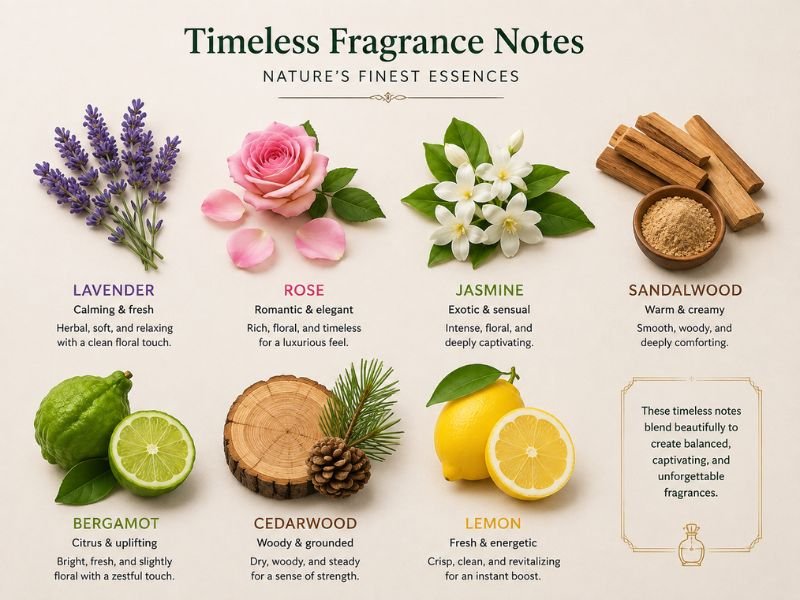
Many essential oils have distinctive scent profiles that make them interesting to perfumers and fragrance enthusiasts.
Lavender
Lavender has a fresh, herbal, clean, and softly floral aroma. It can add an aromatic character to perfumes and works well with floral, citrus, woody, and herbal materials. Perfume and Essential Oils
Rose
Rose is associated with a rich, romantic, floral aroma and is one of the most recognizable fragrance profiles in perfumery. Rose materials can bring elegance and softness to a composition.
Jasmine
Jasmine has an intensely floral and often rich, sweet character. It can add a noticeable floral presence to perfume compositions and is frequently associated with sophisticated fragrance styles. Perfume and Essential Oils
Sandalwood
Sandalwood is known for its creamy, smooth, warm, and woody character. It can provide a soft foundation and blend naturally with floral, spicy, and other woody notes.
Ylang-Ylang
Ylang-ylang has a distinctive floral aroma that can be sweet, exotic, and slightly creamy. It is often useful for adding richness to floral perfume compositions. Perfume and Essential Oils
Bergamot
Bergamot has a fresh citrus character with a subtle floral and slightly bitter nuance. It is particularly useful for creating bright openings in fragrance compositions.
Cedarwood
Cedarwood typically offers a dry, woody, warm, and slightly earthy aroma. It can contribute structure and depth to woody or aromatic perfumes.
Patchouli
Patchouli has an earthy, woody, deep, and slightly sweet scent profile. It is often associated with warm, sophisticated, and oriental-style fragrance compositions.
Peppermint
Peppermint has a crisp, cool, fresh, and strongly minty aroma. Because of its powerful character, it can have a noticeable effect even when used as part of a broader fragrance composition.
Frankincense
Frankincense has a resinous, woody, balsamic, and slightly spicy character. It can add a deep and atmospheric quality to fragrance blends.
Lemon
Lemon essential oil provides a bright, fresh, clean citrus aroma. It can help create an energetic opening in fragrance compositions.
Perfume Oils vs Essential Oils
The terms perfume oil, essential oil, and fragrance oil are sometimes used interchangeably in casual conversations, but they describe different things.
Essential oils are concentrated aromatic extracts derived from plant material. Their chemical composition comes from naturally occurring compounds present in the source material.
Perfume oils generally refer to fragrance compositions carried in an oil base rather than primarily in alcohol. A perfume oil can contain essential oils, fragrance materials, or a combination of aromatic ingredients, depending on the product.
Fragrance oils are formulated aromatic products designed to provide a particular scent. They may contain synthetic aroma compounds, natural materials, or both.
The label alone is not always enough to determine exactly what a product contains, so checking the ingredient information is useful when selecting a fragrance.
Benefits of Using Essential Oils in Fragrance
Essential oils can offer several fragrance-related advantages when appropriately incorporated into a perfume composition.
Natural Aromatic Character
Essential oils can provide recognizable botanical aromas that are difficult to describe as a single simple scent. Their naturally occurring compounds can create layers of floral, citrus, woody, herbal, spicy, or resinous character.
Complex Scent Profiles
A single essential oil can contain numerous aromatic compounds, creating a multidimensional smell rather than a simple one-note impression.
Variety of Botanical Aromas
The variety of essential oils available gives perfumers access to many different scent directions, from fresh citrus and green herbs to deep woods and rich florals.
Customizable Fragrance Combinations
Different essential oils can be combined to create distinctive aromatic profiles. For example, a fresh citrus material may balance a deeper woody ingredient, while floral oils can soften a stronger aromatic composition.
However, “natural” does not automatically mean that an ingredient is suitable for every person or every application. Essential oils should be selected and formulated according to their intended use.
How Long Do Essential Oil-Based Perfumes Last?
The longevity of an essential oil-based perfume can vary considerably. There is no single duration that applies to every formula because fragrance performance depends on many factors.
Oil Volatility
Some aromatic materials evaporate more quickly than others. Fresh citrus notes may disappear sooner, while heavier woody or resinous materials can remain noticeable for longer.
Fragrance Concentration
The amount and combination of aromatic materials in a formulation can influence how strong and persistent the fragrance feels.
Skin Characteristics
Fragrance can smell and develop differently from person to person because skin characteristics, moisture levels, temperature, and other factors can affect evaporation.
Application
Where and how a fragrance is applied can influence its performance. Applying fragrance to suitable areas of the skin or clothing can create a different experience from spraying it into the air.
Storage
Heat, light, oxygen, and poor storage conditions can affect aromatic products over time. Proper storage can help preserve their original character.
Individual Ingredients
Every essential oil has different volatility and aromatic characteristics. A fragrance containing predominantly fresh citrus oils may behave very differently from one built around woody or resinous materials.
How to Choose Perfume and Essential Oils
Choosing between traditional perfume, perfume oils, and essential-oil-based fragrance starts with understanding what you want from the product.
Consider Your Preferred Fragrance Family
Think about whether you enjoy:
- Floral fragrances
- Citrus fragrances
- Woody fragrances
- Fresh fragrances
- Oriental or amber styles
- Gourmand fragrances
- Green or herbal aromas
- Spicy fragrances
Knowing your preferred fragrance family can make product selection much easier.
Check Ingredient Quality
Look for clear labeling and information about the product. When buying essential oils, consider the botanical name, source information, extraction details, and packaging where available.
Consider the Intended Use
A product designed as a room fragrance is not necessarily formulated for use on skin. Always follow the manufacturer’s intended-use information.
Pay Attention to Skin Compatibility
If a fragrance is intended for topical use, consider your own sensitivity and follow appropriate usage instructions. Essential oils can cause irritation or sensitization in some individuals.
Read the Product Label
Ingredient information can help distinguish an essential oil from a perfume oil or fragrance oil. A transparent label also makes it easier to understand what you are purchasing.
Consider Scent Strength
Some people prefer subtle fragrances, while others want a more noticeable scent. The concentration and composition of the fragrance can affect its overall strength.
Think About Personal Preference
There is no universally best fragrance. A perfume that smells excellent to one person may not appeal to another, so personal preference remains one of the most important factors.
Safety Considerations for Essential Oils in Perfume
Essential oils are concentrated substances, so responsible use is important. Even when an oil comes from a natural plant source, it can potentially cause skin irritation or sensitivity in some people.
For products intended for skin, essential oils should be appropriately diluted according to the intended application and product guidance. Applying concentrated essential oils directly to the skin without appropriate formulation is not generally advisable.
Some citrus essential oils have specific phototoxicity considerations, depending on the particular oil and how it was produced. This is one reason why understanding the exact ingredient and following product guidance matters.
A small patch test may help identify individual skin sensitivity, although it cannot guarantee that a reaction will never occur. Essential oils should also be kept away from the eyes and should not be swallowed unless their use has been specifically directed by an appropriately qualified professional.
Children and pets can have different sensitivities and exposure risks, so products containing concentrated essential oils should be stored safely and used according to appropriate guidance.
Best Essential Oil Fragrance Combinations
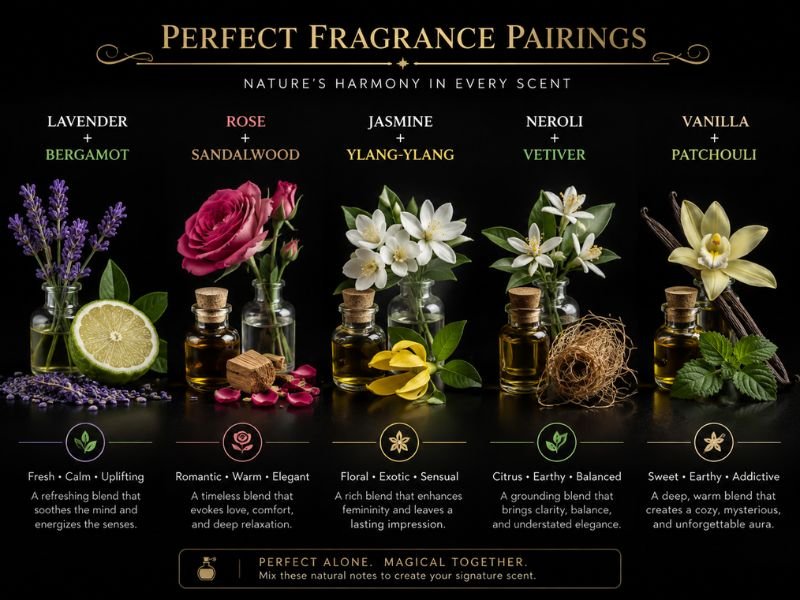
Combining different aromatic materials can create more interesting fragrance profiles. The following combinations are examples of scent directions rather than universal formulas.
Lavender + Bergamot
Lavender and bergamot can create a fresh, clean, aromatic profile with a balance of herbal and bright citrus character.
Rose + Sandalwood
Rose paired with sandalwood can create a soft floral profile supported by a smooth, creamy woody foundation.
Jasmine + Ylang-Ylang
These two floral materials can create a rich, sweet, expressive floral character.
Cedarwood + Patchouli
Cedarwood and patchouli can produce a deeper woody and earthy fragrance direction with a warm, grounded feel.
Frankincense + Cedarwood
Frankincense combined with cedarwood can create a resinous, woody, dry, and atmospheric profile.
When creating or purchasing an essential oil fragrance, the final scent depends on the exact materials, proportions, quality, and formulation.
How to Store Essential Oils and Perfume Properly
Good storage can help maintain the quality and aroma of fragrance products.
Keep Bottles Tightly Closed
Close perfume and essential oil bottles immediately after use to reduce unnecessary exposure to air.
Avoid Excessive Heat
High temperatures can accelerate changes in aromatic products, so storing them away from heat sources is preferable.
Protect From Direct Sunlight
Direct sunlight can affect some fragrance ingredients and may contribute to changes in color or aroma over time.
Use Suitable Containers
Essential oils are commonly stored in appropriate containers designed to protect their contents from environmental exposure.
Check Freshness and Labeling
Pay attention to the product’s label, storage instructions, and condition. Changes in smell, appearance, or consistency may indicate that a product has changed over time.
For perfume, keeping the bottle in a cool, dry, relatively stable environment can help preserve its fragrance character.
Perfume and Essential Oils: Which One Should You Choose?
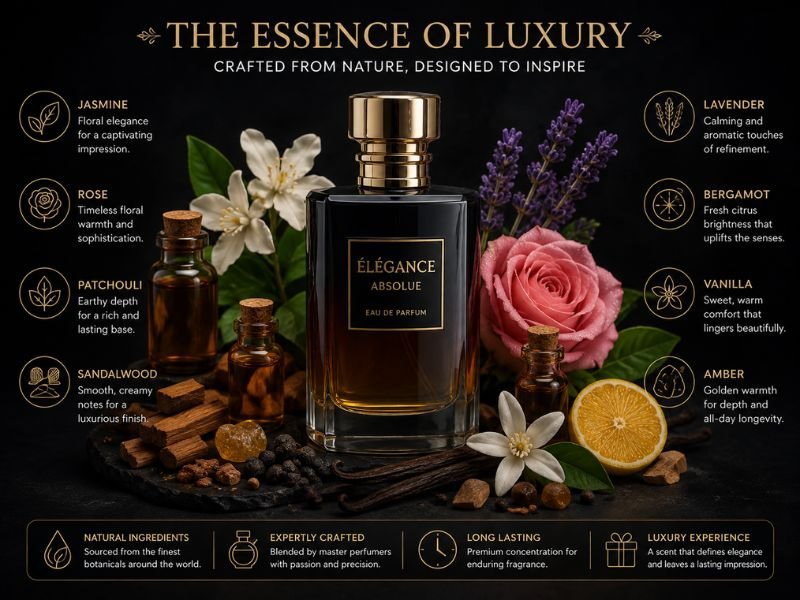
The choice between perfume, perfume oil, and essential-oil-based fragrance depends mainly on your personal preferences and intended use. Traditional perfume may be a good choice for someone who wants a professionally formulated fragrance with a specific scent profile and predictable wearing experience. Perfume oil may appeal to someone who prefers an oil-based fragrance format and a more intimate application style. Essential-oil-based fragrance can be attractive to people who appreciate botanical aromatic materials and want to explore natural fragrance ingredients. None of these options is automatically better for everyone, so the best choice depends on scent preference, formulation, intended application, personal sensitivity, and product quality.
Frequently Asked Questions About Perfume and Essential Oils
Are Essential Oils Used in Perfume?
Yes, essential oils can be used as aromatic ingredients in many perfume compositions to add natural botanical scent characteristics.
What Is the Difference Between Perfume Oil and Essential Oil?
Perfume oil is a finished or semi-finished oil-based fragrance product, while an essential oil is a concentrated aromatic material obtained from plant sources.
Can Essential Oils Make Perfume Smell Longer?
Some heavier essential oils can contribute to a longer-lasting fragrance profile, but overall longevity depends on the complete formulation and individual ingredients.
Which Essential Oils Are Commonly Used in Perfume?
Lavender, rose, jasmine, sandalwood, bergamot, cedarwood, patchouli, ylang-ylang, frankincense, and lemon are among the essential oils commonly associated with perfumery.
Are Essential Oils Safe to Apply Directly to the Skin?
Essential oils are concentrated substances and should generally be appropriately diluted and used according to reliable product-specific safety guidance before topical application.
Conclusion
Perfume and Essential Oils are different but closely connected parts of the fragrance world. Perfume is a formulated fragrance, while essential oils are concentrated botanical extracts used to create distinctive scents. Understanding their differences helps you choose the right product for your preferences and needs.