
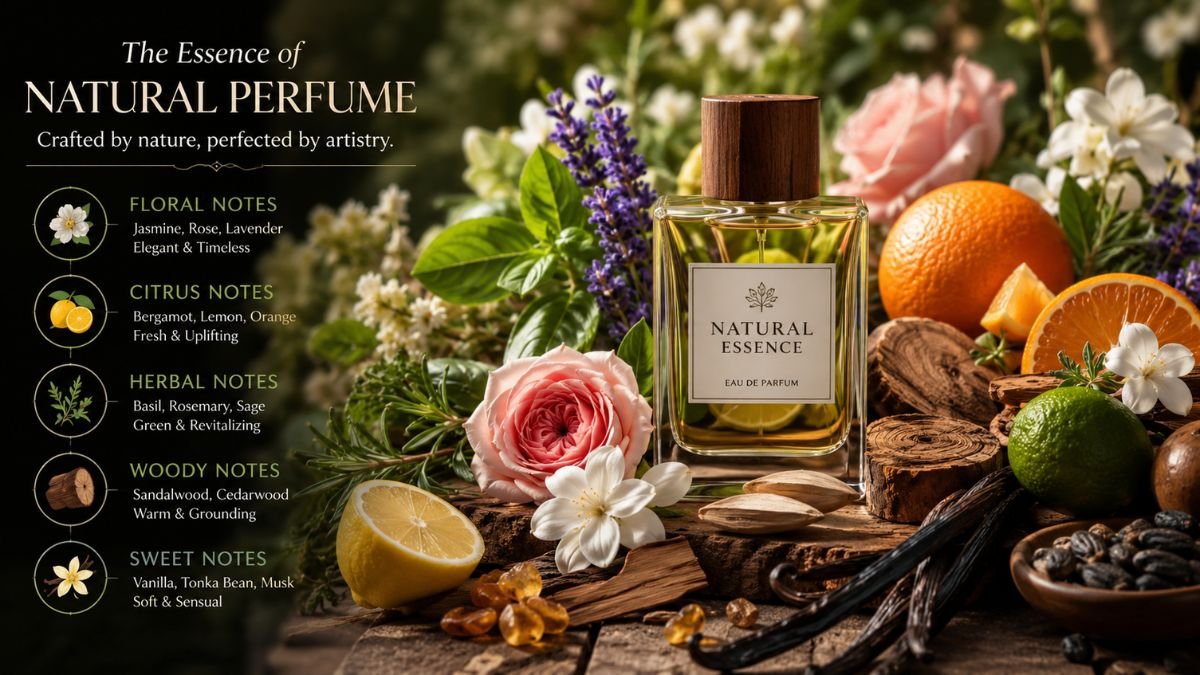
Natural perfume fragrance has become an interesting choice for people who appreciate scents inspired by flowers, herbs, woods, spices, fruits, and other botanical materials. Instead of relying entirely on laboratory-created aroma molecules, natural perfumery can use materials such as essential oils, absolutes, resins, tinctures, and botanical extracts. Natural Perfume Fragrance
A natural fragrance can also provide a distinctive olfactory experience because botanical materials contain complex aromatic compounds. However, “natural” does not automatically mean safer or better for everyone, so ingredient transparency and appropriate formulation remain important when choosing a perfume.
What Is Natural Perfume Fragrance?
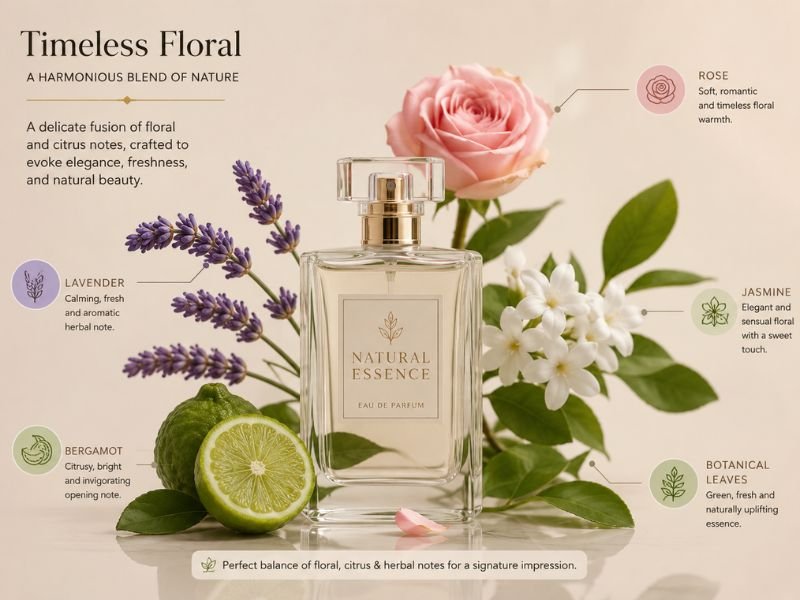
Natural perfume fragrance generally refers to a perfume whose aromatic materials come primarily or entirely from natural sources, particularly plants. Depending on the perfumer or brand, these materials may include essential oils, absolutes, CO₂ extracts, resins, tinctures, and other botanical ingredients. Natural Perfume Fragrance
Flowers such as rose and jasmine, citrus fruits such as bergamot and orange, woods such as cedarwood and sandalwood, and resins such as frankincense and myrrh can all contribute aromatic materials to perfumery.
It is important to note that the word “natural” does not have one universal meaning across every perfume market or brand. Some products marketed as natural may use different standards or allow ingredients from different origins. Checking the ingredient information and the brand’s definition of “natural” is therefore useful. Natural Perfume Fragrance
Key Ingredients in Natural Perfume
Essential Oils
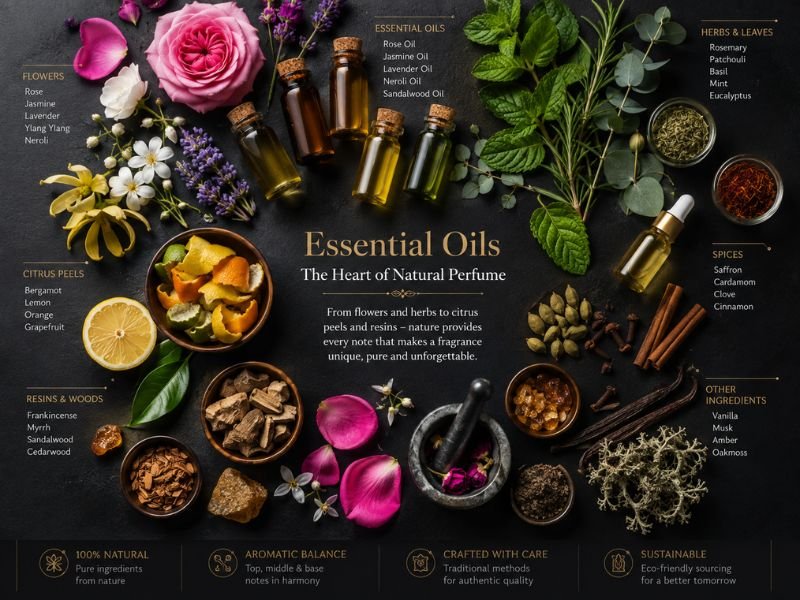
Essential oils are among the best-known materials in natural perfumery. They can be obtained from flowers, leaves, bark, roots, seeds, fruits, and other parts of aromatic plants. Natural Perfume Fragrance
Common extraction methods include steam distillation and cold pressing, while some delicate materials require other extraction techniques.
Examples include:
- Lavender
- Rose
- Jasmine
- Bergamot
- Lemon
- Cedarwood
- Vetiver
- Frankincense
- Sandalwood
Each material contributes its own aroma profile and can play a different role within a fragrance composition.
Botanical Absolutes
Absolutes are concentrated aromatic materials commonly used for delicate flowers and other botanical materials. Jasmine and rose are examples of ingredients that may appear as absolutes in natural perfumery. Natural Perfume Fragrance
Because absolutes can be highly concentrated and aromatic, perfumers carefully balance them with other materials to create a harmonious scent.
Resins and Balsams
Natural resins and balsams can contribute warmth, richness, sweetness, and depth. Frankincense, myrrh, benzoin, and labdanum are examples used in perfumery.
These materials can be particularly useful in the deeper parts of a fragrance composition.
Natural Perfume Scent Profiles
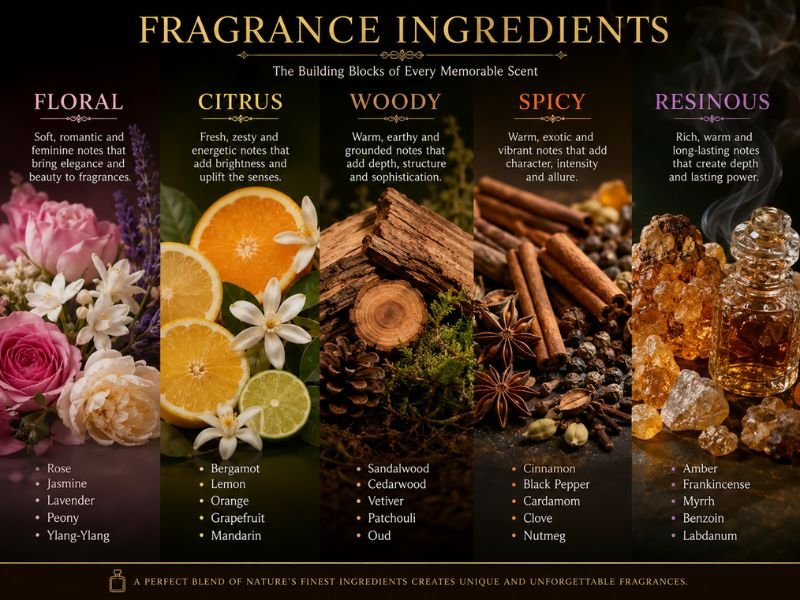
Natural perfumes can be created across many different scent families.
Floral
Floral fragrances feature flowers such as rose, jasmine, lavender, geranium, or ylang-ylang. They can range from fresh and delicate to rich and intense.
Citrus
Citrus notes often create a bright and refreshing opening. Lemon, orange, grapefruit, and bergamot are frequently associated with this style.
Woody
Woody fragrances use materials such as cedarwood, sandalwood, vetiver, and other aromatic woods. They can add warmth, depth, and character. Natural Perfume Fragrance
Spicy
Spices can introduce warmth and complexity. Cinnamon, clove, cardamom, and other aromatic spices may be used in carefully balanced compositions.
Resinous
Resinous fragrances often feel warm, balsamic, and deep. Frankincense, myrrh, benzoin, and labdanum can contribute these qualities.
Understanding Top, Middle, and Base Notes
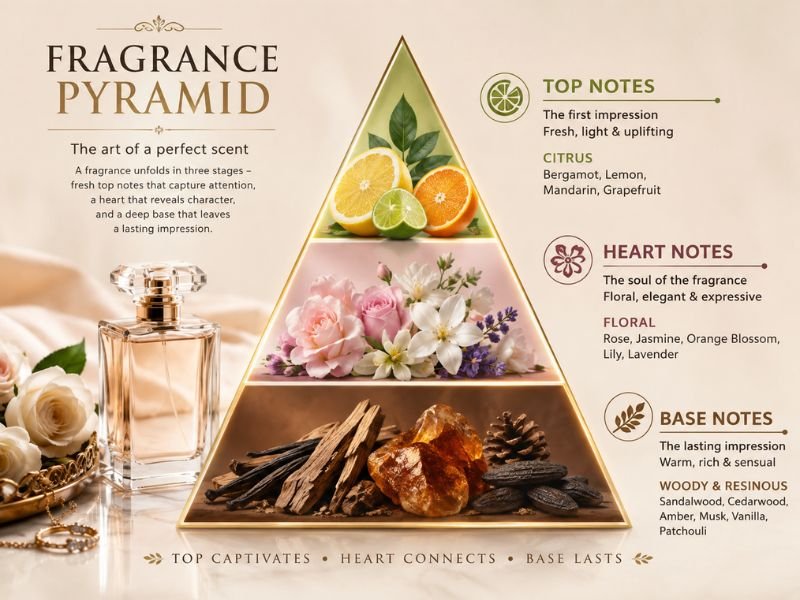
Natural perfume fragrance can also be understood through the traditional structure of top, middle, and base notes.
Top notes are generally the first aromas noticed after application and tend to be more volatile. Citrus materials are common examples. Natural Perfume Fragrance
Middle notes, sometimes called heart notes, provide much of the fragrance’s central character. Floral and herbal materials can work well in this stage.
Base notes provide depth and can remain noticeable longer than more volatile materials. Woods, resins, vanilla, and other heavier aromatic materials may contribute to this part of the composition.
This layered structure helps a perfumer create a fragrance that changes gradually rather than smelling exactly the same from beginning to end.
Natural Perfume vs. Synthetic Fragrance
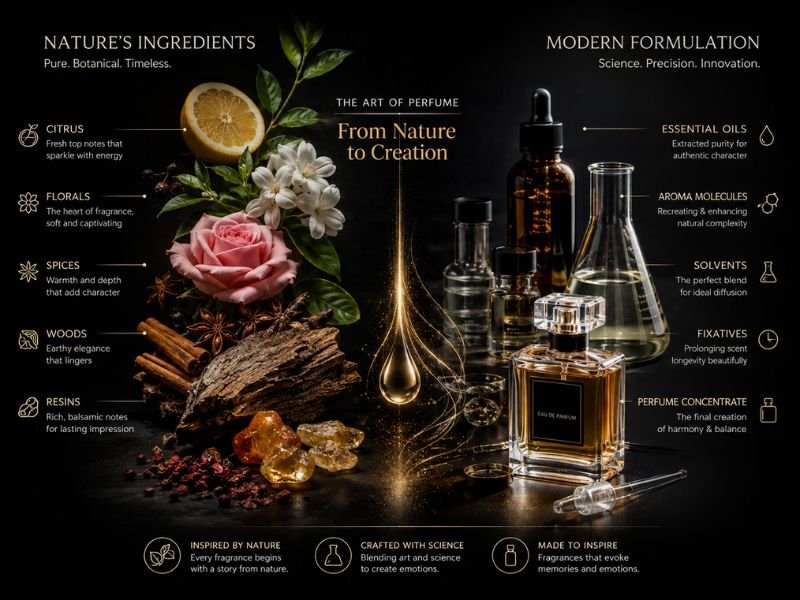
The main difference is the origin of the aromatic materials.
Natural perfumery can rely on botanical materials such as essential oils, absolutes, resins, and extracts. Conventional fragrances may use synthetic aroma molecules designed to create specific scents, improve consistency, or produce effects that can be difficult or expensive to achieve using natural materials alone.
Neither category should automatically be described as universally superior. Natural ingredients can contain naturally occurring compounds that cause sensitivity in some people, while synthetic ingredients are not automatically harmful simply because they are laboratory-created.
For this reason, ingredient transparency and responsible formulation are more useful considerations than simply choosing a product because it says “natural.”
Does Natural Perfume Last Long?
Longevity varies considerably between formulas.
Fresh citrus-heavy compositions may fade more quickly because many citrus aromatic materials are relatively volatile. In contrast, compositions containing woods, resins, and other less volatile materials may remain noticeable for longer.
Skin chemistry, application amount, climate, fragrance concentration, and the specific formula can all affect how long a perfume remains noticeable.
Rather than expecting every natural perfume to perform for a fixed number of hours, it is better to evaluate each fragrance individually.
What Is Alcohol-Free Perfume?
An alcohol-free perfume is a fragrance formulated without the traditional alcohol carrier commonly used in many spray perfumes.
Alcohol-free formats may use oil or another suitable carrier instead. However, alcohol-free and natural are not synonymous terms. A perfume can be alcohol-free without being completely natural, while a natural perfume can use an alcohol base depending on its formulation.
Therefore, always check the product’s ingredient information rather than assuming that one label automatically means another.
How to Choose a Natural Perfume
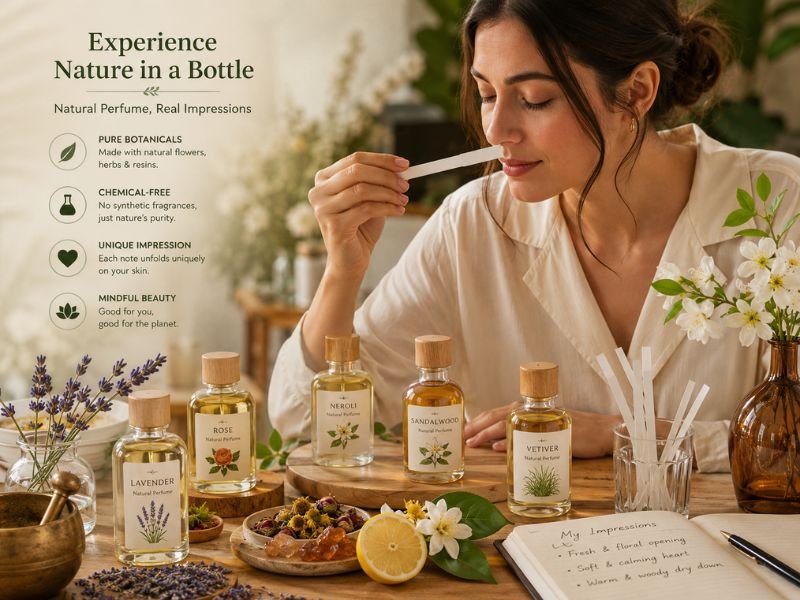
When selecting a natural perfume fragrance, consider the following:
- Read the ingredient information. Look for transparency about the materials used.
- Identify your preferred scent family. Decide whether you enjoy floral, citrus, woody, spicy, or resinous aromas.
- Test the fragrance on skin. A perfume can smell different on skin compared with a paper strip.
- Give it time. Experience the opening, heart, and dry-down before making a decision.
- Consider the occasion. Fresh scents may suit daytime settings, while richer compositions can work well for evenings.
- Check the brand’s definition of “natural.” Different brands can use the term differently.
Are Natural Perfumes Better?
There is no single answer because “better” depends on personal preference.
Someone may prefer natural perfume because they enjoy botanical ingredients, traditional extraction methods, distinctive scent development, or the philosophy behind natural perfumery. Another person may prefer conventional fragrance because of its performance, consistency, wider scent selection, or affordability.
Natural ingredients are also not automatically free from potential sensitivities. Essential oils and other botanical materials can contain naturally occurring fragrance compounds that may cause reactions in susceptible individuals.
Sustainability and Natural Perfumery
Natural perfumery can create a strong connection between fragrance and botanical sourcing, but natural sourcing does not automatically guarantee sustainability.
Large-scale harvesting of aromatic plants can place pressure on biodiversity. Responsible cultivation, sourcing, extraction, and conservation practices are therefore important considerations for the natural fragrance industry.
A responsible natural perfume brand should ideally provide useful information about its ingredients and sourcing rather than relying only on broad marketing claims.
Frequently Asked Questions
What is natural perfume fragrance?
Natural perfume fragrance is a perfume made with aromatic materials obtained from natural sources, especially plants. Common materials include essential oils, absolutes, botanical extracts, tinctures, and resins.
Is natural perfume the same as organic perfume?
No. “Natural” and “organic” describe different concepts. A natural perfume can contain naturally sourced ingredients without every ingredient necessarily being certified organic.
Are essential oils used in natural perfume?
Yes. Essential oils are among the most common aromatic materials used in natural perfumery. They can come from flowers, leaves, fruits, woods, roots, seeds, and other botanical sources.
Does natural perfume smell different from synthetic perfume?
It can. Natural materials contain complex mixtures of aromatic compounds, and their scent may develop differently on skin. Synthetic materials can also be formulated to create highly precise and consistent fragrance effects.
Is natural perfume always alcohol-free?
No. Natural perfume and alcohol-free perfume are not interchangeable terms. A natural perfume can use an alcohol carrier depending on its formulation.
How should natural perfume be stored?
Keep perfume away from excessive heat, strong sunlight, and large temperature changes. Proper storage can help protect the fragrance from unnecessary degradation.
Conclusion
Natural perfume fragrance offers an interesting approach to modern perfumery by highlighting botanical materials such as essential oils, absolutes, woods, citrus extracts, and resins. Its appeal comes from the variety and character of natural aromatic materials, but choosing a good fragrance should involve more than the word “natural.” Checking ingredients, understanding scent profiles, considering personal preferences, and evaluating how the perfume develops on skin can help you find a fragrance that genuinely suits you.