
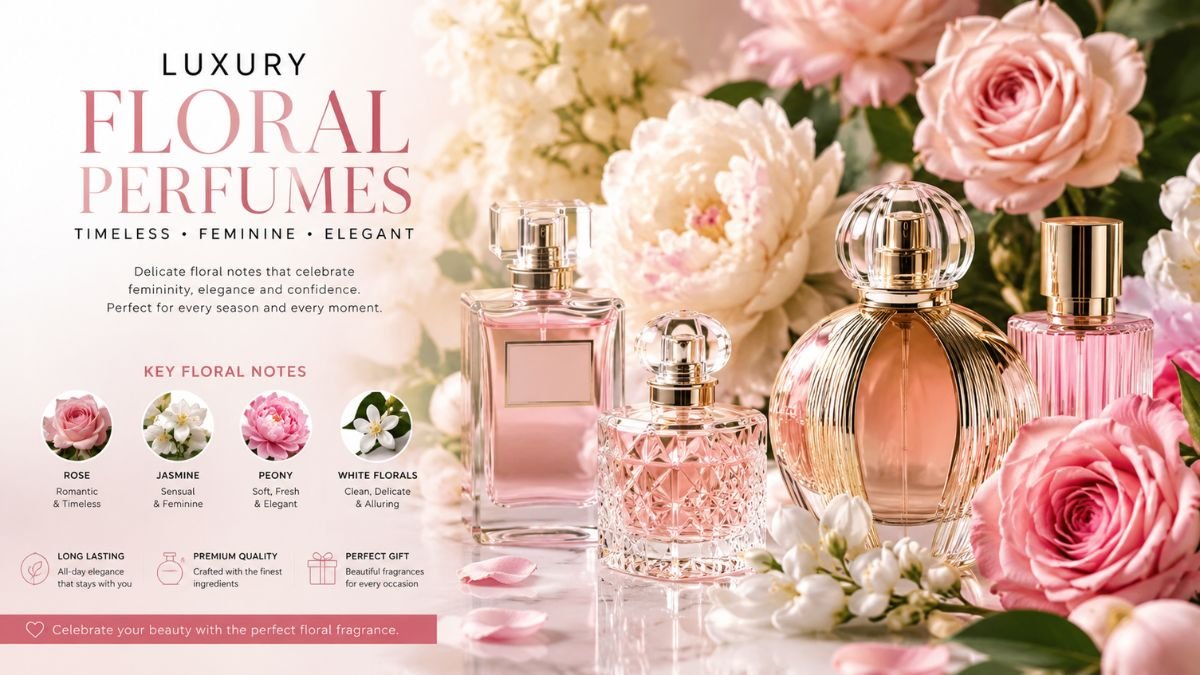
Floral Women’s Perfume is one of the most versatile fragrance categories, built around the scent of flowers such as rose, jasmine, peony, violet, tuberose, and orange blossom. These fragrances can be fresh and airy, soft and powdery, sweet and romantic, or rich and sophisticated, depending on the floral notes and other ingredients used in the composition. Their broad range makes floral perfumes popular for everyday wear, special occasions, professional settings, and evening events. Floral Women’s Perfume
Choosing the right floral fragrance is about more than simply picking a perfume that contains flowers. The balance between floral, fruity, woody, musky, fresh, sweet, or warm notes can dramatically change how a fragrance smells. In this guide, you will learn about popular floral fragrance notes, different floral perfume styles, how to choose a scent for different occasions and seasons, fragrance concentrations, and practical tips for testing and wearing floral perfumes.
What Is a Floral Women’s Perfume?
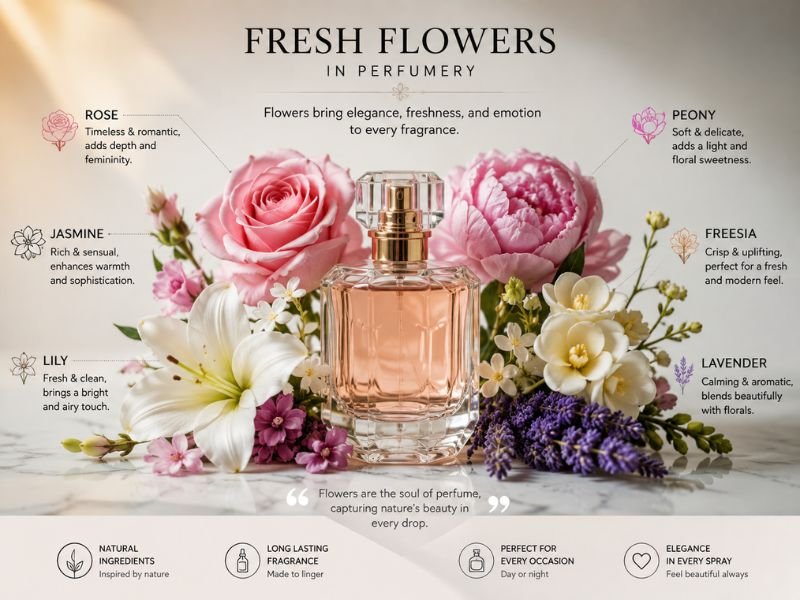
A Floral Women’s Perfume is a fragrance in which one or more floral notes play a major role in the overall scent. Perfumers may use natural flower extracts, aroma molecules, or a combination of materials to create floral accords that resemble individual flowers or broader floral impressions.
Some fragrances focus mainly on one flower, such as rose or jasmine, while others combine several flowers to create a more complex bouquet. Floral perfumes may also include fruit, citrus, musk, woods, vanilla, amber, or green notes, allowing the final fragrance to range from light and fresh to deep and warm.
A floral perfume does not necessarily smell like a fresh bouquet of flowers. Modern perfumery often combines floral notes with other fragrance families to create distinctive compositions. For example, a rose fragrance can be fresh and citrusy, while another rose-based perfume may be powdery, woody, or sweet. Floral Women’s Perfume
Popular Floral Notes in Women’s Perfumes
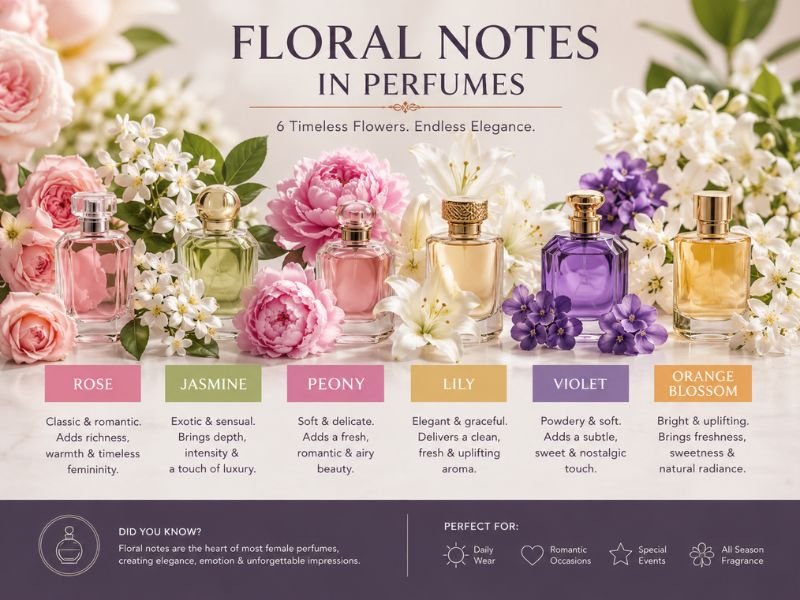
Understanding individual floral notes can make it easier to find a women’s floral fragrance that matches your preferences. Each flower has its own characteristic impression, although the final scent can vary depending on the perfume formula. Floral Women’s Perfume
Rose
Rose is one of the most recognizable floral notes in perfumery and can create anything from fresh and delicate compositions to rich and elegant fragrances. Depending on the formulation, rose may be paired with citrus, fruits, musk, woods, spices, or other flowers. Floral Women’s Perfume
Rose perfumes are often associated with romantic and sophisticated fragrance styles, but modern compositions can make the note feel fresh, youthful, clean, or contemporary.
Jasmine
Jasmine is known for its noticeable, rich, and elegant floral character. It is frequently used in the heart of perfumes, where it can contribute a smooth and expressive floral quality.
Jasmine may appear in fresh floral perfumes as well as richer white-floral compositions. Its character can become particularly prominent when combined with tuberose, orange blossom, vanilla, musk, or woody notes.
Peony
Peony is often associated with a soft, fresh, and airy floral impression. It can work particularly well in fragrances designed to feel light, clean, and romantic.
Peony is commonly combined with fruits, rose, citrus, musk, or other delicate floral notes. This makes it a useful choice for people who enjoy floral perfumes that do not feel overly heavy.
Lily
Lily-inspired fragrances can have a clean, bright, and elegant floral character. Depending on the formulation, lily accords may be fresh, green, creamy, or slightly sweet.
Lily notes can work well in daytime fragrances and are often combined with fresh, green, aquatic, or musky elements.
Violet
Violet is often associated with a delicate, powdery, and slightly sweet floral impression. It can give a fragrance a soft and nostalgic character without necessarily making the perfume strongly sweet.
Violet can be combined with iris, musk, woods, fruits, or other florals to create different interpretations ranging from clean and elegant to warm and powdery.
Tuberose
Tuberose is a prominent white-floral note with a creamy and intense character. It is often used when a fragrance is designed to have a noticeable floral presence.
Because tuberose can be quite expressive, it is frequently balanced with green, citrus, fruity, woody, or musky notes to shape the overall composition.
Orange Blossom
Orange blossom offers a bright, sweet, and citrus-floral character. Although it comes from the same tree associated with citrus fruit, the flower itself contributes a distinct floral quality to fragrance compositions.
Orange blossom can appear in fresh daytime perfumes as well as sweeter or warmer compositions, making it a versatile ingredient in women’s fragrances.
Different Types of Floral Women’s Perfumes
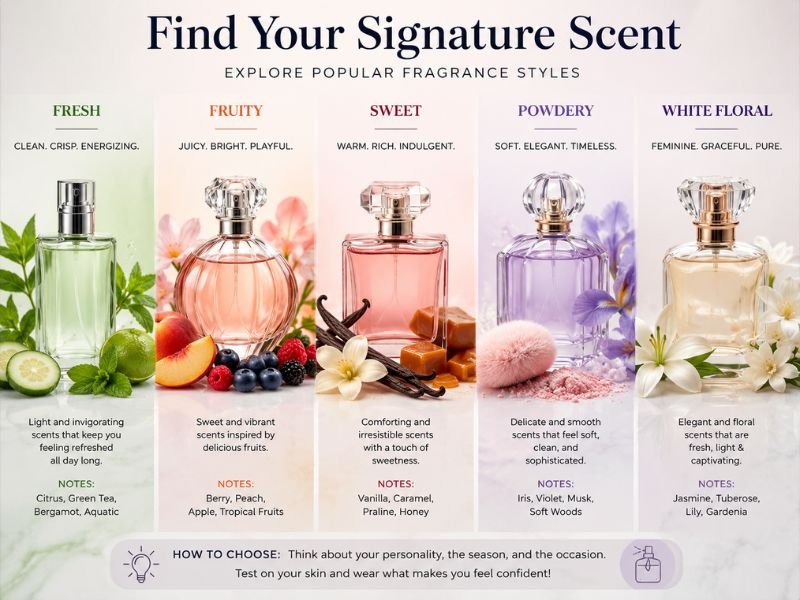
Floral perfumes are not one single scent style. They can be divided into several categories based on the way floral notes interact with other fragrance families.
Fresh Floral
Fresh floral perfumes combine floral notes with clean, airy, green, or citrus-like accords. They are often a good choice for people who prefer fragrances that feel light and refreshing.
Fruity Floral
Fruity floral perfumes combine flowers with fruit notes such as pear, peach, apple, berries, or tropical fruits. The result can feel bright, playful, juicy, and youthful.
Sweet Floral
Sweet floral fragrances emphasize flowers alongside vanilla, caramel-like accords, fruits, tonka, or other sweet ingredients. They can create a softer and more comforting fragrance profile.
Powdery Floral
Powdery floral perfumes often feature violet, iris, rose, musk, or similar notes. They tend to have a soft, smooth, elegant character and can appeal to people who enjoy classic-feeling fragrances.
White Floral
White-floral fragrances commonly feature flowers such as jasmine, tuberose, gardenia, and orange blossom. They can range from fresh and clean to creamy, rich, and highly expressive.
Floral Musk
Floral musk fragrances combine floral notes with soft musk accords. This combination can create a clean, gentle, and understated fragrance style suitable for people who prefer subtle scents.
Floral Woody
Floral woody perfumes combine flowers with woods such as sandalwood, cedar, vetiver, or other woody accords. The floral opening or heart can be balanced by a warmer, deeper base.
Floral Oriental
The term “oriental” is an older fragrance classification that is sometimes used for warm compositions featuring floral notes alongside amber, spices, woods, resins, or sweet accords. Modern fragrance descriptions may use terms such as amber or warm floral instead.
Green Floral
Green floral perfumes combine flowers with leafy, herbal, or fresh green accords. They often create a crisp and natural-feeling fragrance impression.
Best Floral Women’s Perfume Styles for Different Occasions
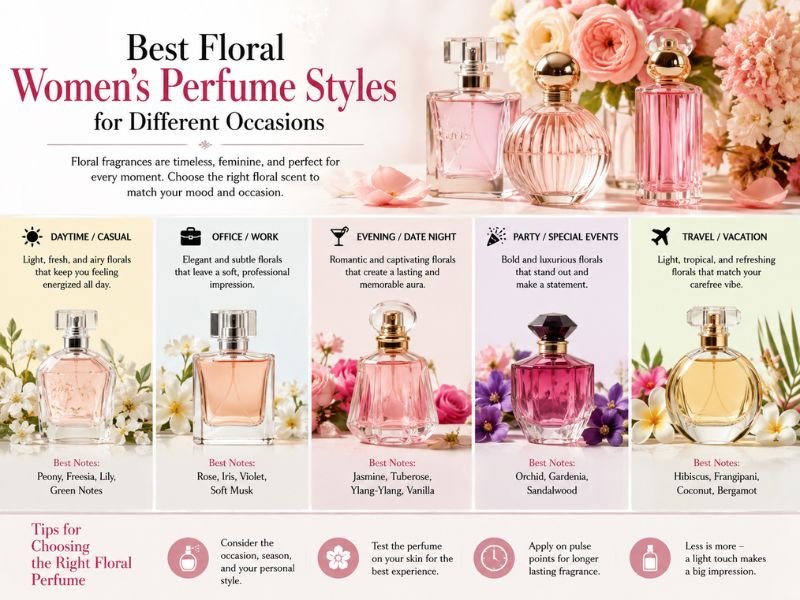
The best floral perfume style depends on the setting, your personal taste, and how noticeable you want the fragrance to be.
Everyday Wear
For everyday use, fresh floral, fruity floral, soft musk, and light floral compositions can be comfortable choices. Their balanced profiles are often easier to wear across different casual situations.
School or Casual Daytime Settings
A light floral or fresh floral fragrance may work well for casual daytime environments. When wearing fragrance around other people, a subtle application is generally more considerate than a heavy scent.
Work or Professional Environments
Clean floral, powdery floral, and soft floral-musk fragrances can suit professional settings where an understated fragrance is preferable.
Dates and Social Occasions
Fruity floral, rose, jasmine, and softly sweet floral fragrances can offer a more expressive character for social occasions. The ideal choice ultimately depends on whether you prefer something fresh, romantic, elegant, or warm.
Weddings and Celebrations
Elegant rose, jasmine, peony, orange blossom, and white-floral compositions can complement celebratory occasions. A balanced fragrance can provide a polished finishing touch without overpowering the setting.
Evening Events
For evenings, richer floral, floral-woody, white-floral, or warm floral compositions can work well. Fragrances with deeper base notes may feel more suitable for cooler or formal environments.
Spring and Summer
Fresh floral, green floral, citrus-floral, and light fruity-floral fragrances are often appealing during warmer weather because their profiles can feel bright and airy.
Fall and Winter
Warmer floral compositions featuring woods, amber, vanilla, musk, or spices can feel more comfortable during cooler weather.
How to Choose the Right Floral Women’s Perfume
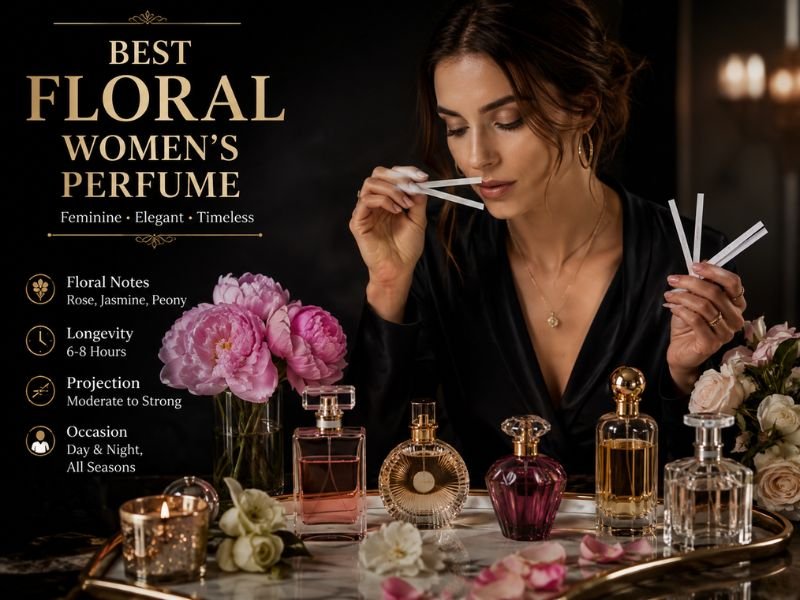
Finding the right floral perfume begins with identifying the types of scents you already enjoy. If you prefer fresh and clean fragrances, look toward fresh florals, green florals, or citrus-floral compositions; if you enjoy sweeter scents, fruity florals or sweet florals may be more suitable.
Consider the specific flowers you like, but remember that a perfume’s complete composition matters more than one ingredient. A jasmine perfume can smell dramatically different depending on whether jasmine is surrounded by citrus, fruits, woods, musk, vanilla, or other floral notes.
The occasion is another important factor. A soft floral may be appropriate for everyday wear, while a richer white floral or floral-woody fragrance may be better suited to evening occasions.
Fragrance concentration can also influence the experience, but concentration alone does not determine exactly how long a perfume will last. Formula, application, skin chemistry, climate, and individual perception can all affect fragrance performance.
Floral Perfume Concentrations Explained
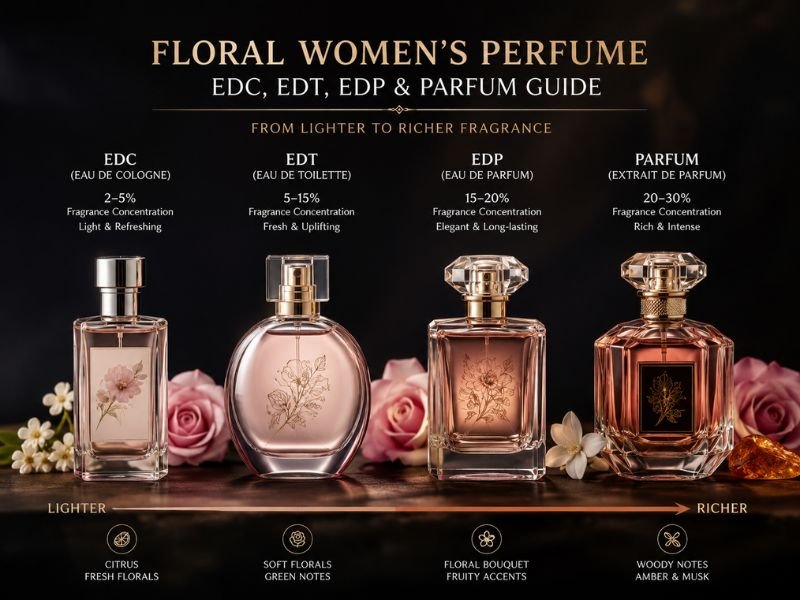
Fragrance concentration refers broadly to the proportion of aromatic materials in a fragrance formula, although naming conventions can vary between brands.
Eau de Cologne (EDC): Traditionally a lighter fragrance style that is often designed to provide a fresh and relatively airy experience.
Eau de Toilette (EDT): Generally lighter than many Eau de Parfum formulas and commonly used for fresh or everyday fragrances.
Eau de Parfum (EDP): Often contains a higher concentration of fragrance materials than EDT and is widely used for both daytime and evening perfumes.
Parfum: Usually represents a more concentrated fragrance format and can provide a richer fragrance experience, although actual composition and performance vary by product.
It is important not to judge a perfume solely by its concentration label because two fragrances with the same concentration can perform differently.
How to Make Floral Perfume Last Longer
Several simple habits can help you get more consistent performance from a fragrance.
Apply perfume to clean, moisturized skin, as dry skin may not hold fragrance as comfortably as moisturized skin. Common application areas include the wrists and neck, but the exact method should follow the fragrance manufacturer’s guidance.
Avoid aggressively rubbing the fragrance into your skin after application, as this can change how the fragrance develops on the surface. If you want to refresh the scent later, use the product according to its directions rather than applying excessive amounts.
Proper storage also matters. Keep perfume away from excessive heat, strong sunlight, and large temperature changes, and store the bottle in a cool, dry place when possible.
Floral Women’s Perfume vs. Other Fragrance Families
Floral fragrances are defined primarily by their floral character, but they often overlap with other fragrance families.
Fruity fragrances emphasize fruit-inspired notes and can be juicy, bright, or sweet, while fruity-floral perfumes combine those qualities with flowers.
Woody fragrances focus more heavily on woods such as cedar, sandalwood, or vetiver, although many woody perfumes include floral notes.
Fresh fragrances generally emphasize clean, airy, citrus, aquatic, or green sensations and may contain delicate floral accords.
Gourmand fragrances are inspired by edible or dessert-like sensations such as vanilla, caramel, chocolate, or creamy accords, and these can be combined with flowers to create sweet floral perfumes.
Amber fragrances typically emphasize warm, rich, resinous, sweet, or spicy qualities and may use flowers to add elegance or contrast.
Oriental-style fragrances, an older classification, traditionally describe warm compositions involving combinations of amber, spices, woods, resins, sweetness, and sometimes prominent floral notes.
No fragrance family is universally better than another; the right choice depends on personal taste and the experience you want from a perfume.
Who Should Wear Floral Women’s Perfume?
Floral Women’s Perfume can suit anyone who enjoys flower-inspired fragrance profiles. The category includes so many styles that it is possible to find fresh, subtle, sweet, powdery, warm, elegant, or expressive options within the same broad family.
Some people may prefer a delicate peony or violet fragrance, while others may enjoy the richer character of jasmine or tuberose. Your favorite floral note does not have to match someone else’s preference, and there is no universal “best” floral perfume for every woman.
The most useful approach is to focus on the fragrance profile you personally enjoy rather than choosing a perfume simply because it is popular.
Tips for Testing a Floral Perfume Before Buying
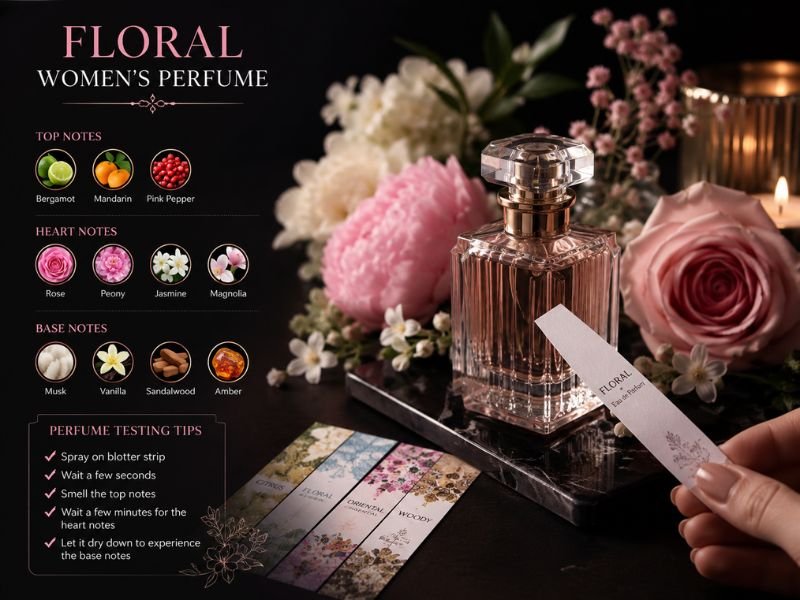
Testing a perfume properly can make the buying decision much easier.
- Smell it on a blotter first: This gives you an initial impression without immediately applying multiple fragrances to your skin.
- Test it on skin if possible: Skin can influence how fragrance notes develop, so a perfume may smell different on skin than on paper.
- Give it time to develop: The opening is only the first stage of a fragrance, so allow time to experience its changing character.
- Compare the opening, heart, and dry-down: These stages can reveal different aspects of the perfume as lighter materials fade and deeper notes become more noticeable.
- Avoid testing too many fragrances at once: Too many scents can make it difficult to distinguish individual fragrance profiles.
- Consider your climate and occasion: A fragrance that feels comfortable in warm daytime weather may not provide the same experience during a cool evening.
Taking a little time to test a floral fragrance can help you understand whether its complete development matches your expectations.
Frequently Asked Questions About Floral Women’s Perfume
1. What is a floral women’s perfume?
A floral women’s perfume is a fragrance in which one or more flower-inspired notes form an important part of the overall scent.
2. Which floral notes are most popular in women’s perfumes?
Rose, jasmine, peony, lily, violet, tuberose, gardenia, and orange blossom are among the widely used floral notes in women’s fragrances.
3. Are floral perfumes good for everyday wear?
Yes, many fresh, soft, fruity-floral, and floral-musk perfumes can work well for everyday wear when applied appropriately.
4. How long does floral women’s perfume last?
The longevity of a floral perfume varies according to its formula, concentration, skin chemistry, climate, and application.
5. How do I choose the best floral perfume for women?
Choose a floral perfume based on the notes, fragrance intensity, season, occasion, concentration, and overall scent style you personally enjoy.
Conclusion
Choosing the right Floral Women’s Perfume is ultimately a personal experience shaped by your favorite floral notes, preferred fragrance style, season, occasion, and desired intensity. From fresh peony and citrus-floral compositions to elegant rose, expressive jasmine, creamy tuberose, and warm floral-woody blends, the category offers a wide range of choices. Instead of searching for one universally perfect perfume, focus on understanding the fragrance families and testing scents on your own skin so you can find a floral fragrance that genuinely suits your taste and lifestyle.